
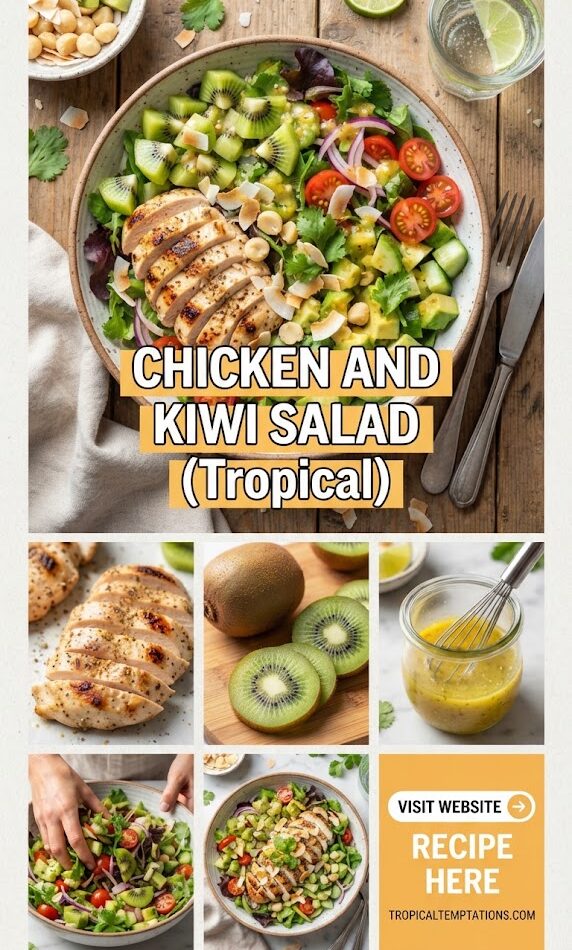
In the world of contemporary gastronomy, the boundaries between sweet and savory have blurred, giving rise to some of the most exciting flavor profiles in modern cooking. Among these innovations, the Chicken and Kiwi Salad stands out as a triumphant example of tropical fusion. It is a dish that challenges the palate, offering a sophisticated balance of lean protein, vibrant fruit acidity, and the refreshing crunch of garden-fresh greens.
This isn’t just another salad; it is a nutritional powerhouse designed for those who refuse to compromise on taste while pursuing a healthy lifestyle. Whether you are looking for a light summer lunch, a post-workout recovery meal, or a show-stopping side dish for a backyard barbecue, this tropical masterpiece delivers on every front.
The Science of Flavor: Why Kiwi and Chicken Work Together
To the uninitiated, fruit in a meat-based salad might seem like a bold choice. However, the pairing of kiwi and chicken is rooted in culinary science. Kiwi contains a unique enzyme called actinidin. This natural enzyme acts as a tenderizer, breaking down protein fibers. When used in a marinade or simply eaten alongside grilled chicken, kiwi helps enhance the texture of the meat, making every bite succulent and easy to digest.
From a flavor perspective, the “Tropical” moniker comes from the kiwi’s profile—a cross between a strawberry, a pineapple, and a melon. When combined with the savory, umami notes of seasoned chicken, the kiwi provides a high-frequency “zing” that cuts through the richness of the meat. Add a citrus-based dressing, and you have a trifecta of sweet, sour, and savory that keeps your taste buds engaged from the first forkful to the last.
The Foundation: Choosing the Perfect Ingredients
The secret to a world-class salad lies in the quality of the raw materials. Because this dish relies on fresh produce, selecting the right components is paramount.
1. The Chicken: The Protein Anchor
For a traditional tropical salad, boneless, skinless chicken breast is the gold standard. It provides a clean, lean canvas that absorbs marinades beautifully. However, if you prefer a juicier, richer flavor, chicken thighs are an excellent alternative.
- Pro Tip: Opt for organic, air-chilled chicken. It has a lower water content than conventional chicken, meaning it sears better and holds more flavor.
2. The Kiwi: The Star of the Show
There are two main varieties of kiwi available in the USA: the Hayward (Green) and the SunGold (Golden).
- Green Kiwi: Offers a classic tangy-sweet flavor and a vibrant emerald color.
- Gold Kiwi: Is significantly sweeter with a tropical, almost mango-like undertone. Using a mix of both adds visual depth and a complex sweetness to your salad.
3. The Greens: A Bed of Freshness
Avoid wilted, flavorless iceberg lettuce. Instead, build your base with a mix of:
- Baby Spinach: For iron and a soft texture.
- Arugula (Rocket): For a peppery bite that contrasts the sweet kiwi.
- Mâche or Butter Lettuce: For a velvety mouthfeel.
4. The “Crunch” Factor
A great salad needs texture. For a tropical theme, consider:
- Toasted Macadamia Nuts: The ultimate Hawaiian touch.
- Slivered Almonds: For a subtle, nutty earthiness.
- Toasted Coconut Flakes: To lean heavily into the island vibes.
The Ultimate Tropical Dressing: Honey-Lime Vinaigrette
A salad is only as good as its dressing. For the Chicken and Kiwi Salad, you want something that bridges the gap between the fruit and the poultry.
Ingredients for the Vinaigrette:
- 1/4 cup Extra Virgin Olive Oil (Cold-pressed)
- 2 tablespoons Fresh Lime Juice (Zest the lime first for extra punch)
- 1 tablespoon Raw Honey or Agave Nectar
- 1 teaspoon Dijon Mustard (to emulsify the oils)
- A pinch of Red Pepper Flakes (for a hint of heat)
- Salt and Cracked Black Pepper to taste
This dressing provides the “acidic spine” of the dish, ensuring that the sweetness of the kiwi doesn’t become cloying.
Step-by-Step Culinary Guide: Preparing the Masterpiece
Step 1: Marinating the Chicken
Before the chicken ever touches the grill, it needs a flavor bath. Create a simple marinade of lime juice, olive oil, minced garlic, and a dash of cumin. Let the chicken sit for at least 30 minutes. This ensures that the tropical flavors penetrate deep into the meat.
Step 2: The Perfect Sear
Heat a cast-iron skillet or outdoor grill to medium-high heat. Sear the chicken for 6–7 minutes per side until the internal temperature reaches 165°F (74°C).
- The Secret: Let the chicken rest for 10 minutes before slicing. This allows the juices to redistribute, preventing the chicken from becoming dry.
Step 3: Preparing the Kiwi
Peeling a kiwi can be tricky. The most efficient method is the “Spoon Technique.” Cut off both ends of the kiwi, insert a spoon between the skin and the flesh, and rotate it around the fruit. The skin will slide right off. Slice the kiwi into beautiful rounds or quarter-moons.
Step 4: Assembling with Intention
Building a salad is an art form. Start with a generous layer of greens. Arrange the sliced, rested chicken in the center. Scatter the kiwi slices around the perimeter. Add your “crunch” (nuts/coconut) and perhaps some thinly sliced red onion for a pop of color and sharpness. Drizzle the dressing just before serving to maintain the crispness of the greens.
Nutritional Breakdown: Why Your Body Will Thank You
The Chicken and Kiwi Salad isn’t just delicious; it’s a nutritional goldmine. Let’s break down the benefits:
- Vitamin C Overload: One kiwi contains more Vitamin C than an orange. This is vital for collagen production, skin health, and immune function.
- Lean Protein: Chicken breast provides the essential amino acids needed for muscle repair and satiety.
- Healthy Fats: The monounsaturated fats from olive oil and macadamia nuts support heart health and help the body absorb fat-soluble vitamins (A, D, E, and K).
- Potassium and Fiber: Kiwi is rich in potassium (great for blood pressure) and fiber (essential for gut health).
Variations to Keep Things Interesting
One of the best aspects of this salad is its versatility. You can adapt it to suit your specific cravings or dietary needs.
1. The “Spicy Island” Variation
Add diced jalapeños and a dash of Sriracha to the vinaigrette. The heat of the peppers against the cooling kiwi is a legendary combination found in many Polynesian cuisines.
2. The “Creamy Tropical” Variation
Add half an avocado (sliced) and a sprinkle of goat cheese or feta. The creaminess of the cheese adds a decadent layer that complements the acidic fruit.
3. The “Grain Bowl” Variation
Turn this into a hearty dinner by adding a base of cooked quinoa or farro. This adds complex carbohydrates and makes the meal even more filling for those with high activity levels.
4. The Seafood Swap
If you aren’t in the mood for chicken, grilled shrimp or seared scallops are phenomenal substitutes. The sweetness of the seafood pairs exquisitely with the kiwi.
Advanced Tips for the Home Chef
To take your salad from “good” to “restaurant quality,” consider these professional tips:
- Char Your Fruit: Try lightly searing the kiwi slices on a very hot pan for 30 seconds. This caramelizes the natural sugars and adds a smoky depth.
- Pickle the Onions: Soak your red onion slices in lime juice and a pinch of sugar for 15 minutes before adding them to the salad. This removes the “bite” and turns them a beautiful bright pink.
- Temperature Contrast: Serve the chicken warm against the cold greens and chilled kiwi. This temperature play creates a more dynamic eating experience.
The Cultural Significance of Fruit in Savory Dishes
While the Chicken and Kiwi Salad feels like a modern “superfood” invention, the concept of mixing fruit with meat has deep roots. Persian cuisine often features pomegranate and chicken; Moroccan dishes pair lamb with apricots; and Mexican salsas frequently use mango and pineapple.
The “Tropical” version—specifically utilizing kiwi—is a nod to the Pacific Rim culinary movement. It represents a fusion of Western protein preparation with the exotic bounty of the islands. By embracing this salad, you are participating in a long-standing tradition of global culinary exchange.
Meal Prepping and Storage
Can you make this in advance? Yes, with a few caveats.
- Separate the Dressing: Never dress the salad until you are ready to eat. The acid in the lime juice will wilt the greens and turn the kiwi mushy within hours.
- Store Chicken Separately: Keep the grilled chicken in an airtight container. It can be eaten cold the next day or slightly reheated.
- Kiwi Slicing: Kiwi tends to oxidize slightly. If you are meal-prepping for the week, it’s best to slice the kiwi fresh each morning.
Pairing Suggestions: Completing the Experience
If you are serving this for a dinner party or a special lunch, what should you serve alongside it?
- Drink Pairing: A crisp Sauvignon Blanc with citrus notes or a chilled Hibiscus Iced Tea. For a non-alcoholic option, sparkling water with a squeeze of lime and a sprig of mint.
- Side Dish: A small bowl of coconut-lime rice or a few pieces of toasted sourdough brushed with garlic oil.
- Dessert: Keep it light. A simple sorbet (lemon or mango) or a few squares of dark chocolate.
Frequently Asked Questions (FAQs)
Is kiwi skin edible?
Yes! Many people don’t realize that kiwi skin is completely edible and contains a high concentration of fiber and antioxidants. If you don’t mind the texture, you can simply scrub the fuzz off and slice the kiwi whole. However, for a refined salad experience, most prefer it peeled.
Can I use canned fruit?
In a pinch, you could use canned pineapple or mandarin oranges, but there is no substitute for fresh kiwi. Canned fruits are often packed in syrup, which adds unnecessary sugar and lacks the enzymatic benefits of fresh kiwi.
Is this salad suitable for a Keto diet?
Absolutely. Chicken is zero-carb, and while kiwi contains natural sugars, it is relatively low on the glycemic index compared to other fruits. Just be mindful of the honey in the dressing—swap it for a keto-friendly sweetener like monk fruit or simply omit it.
How do I tell if a kiwi is ripe?
A ripe kiwi will give slightly when pressed, similar to a peach or an avocado. If it’s rock-hard, it’s underripe and will be very sour. If it’s mushy, it’s overripe and may have a fermented taste.
Common Mistakes to Avoid
- Overcooking the Chicken: Nothing ruins a salad faster than dry, rubbery chicken. Use a meat thermometer to ensure perfection.
- Using Underripe Kiwi: An underripe kiwi is excessively tart and can overpower the other ingredients. Ensure your fruit is at peak ripeness.
- Drowning the Salad: Use the dressing sparingly. You want to enhance the flavors of the ingredients, not submerge them.
- Neglecting the Salt: Even though there is fruit involved, the chicken and the greens need salt to help the flavors “pop.”
The Ethical and Environmental Impact
When shopping for your Chicken and Kiwi Salad, consider the source. Many kiwis in the USA are imported from New Zealand (Zespri) or grown locally in California. Choosing “Fair Trade” fruit ensures that the workers are treated fairly. Similarly, choosing pasture-raised chicken supports more humane farming practices and often results in a more nutrient-dense product.
By being a conscious consumer, the salad doesn’t just taste better—it feels better to eat.
Conclusion: A Refreshing New Staple
The Tropical Chicken and Kiwi Salad is more than just a recipe; it’s a celebration of freshness, health, and culinary creativity. It breaks the monotony of standard meal prep and brings a burst of island sunshine into your kitchen, regardless of the season.
With its perfect mix of high-quality protein, essential vitamins, and an array of textures, it is a dish that satisfies the body and the soul. So, the next time you’re at the grocery store, grab a pack of kiwis and some fresh chicken. Your journey to the tropics is only a salad bowl away.
Whether you’re dining alfresco on a humid July evening or looking for a bright spot during a cold winter afternoon, this salad is your ticket to a vibrant, flavorful, and healthy lifestyle. Enjoy the zest, savor the crunch, and embrace the tropical transformation of your dinner table.