In the world of culinary delights, few combinations offer the satisfying crunch, vibrant color, and lean protein punch of a well-crafted Chicken and Carrot Salad. Often overlooked as a simple side dish, this duo is actually the foundation for some of the world’s most sophisticated and health-conscious meals. From the zesty, herb-laden streets of Hanoi to the rustic bistros of France, the chicken and carrot pairing is a global superstar.
Whether you are a meal-prep enthusiast looking for a lunch that won’t go soggy, a fitness buff seeking high-protein fuel, or a parent trying to sneak more vegetables into a picky eater’s diet, the chicken and carrot salad is your secret weapon. This comprehensive guide explores everything you need to know about mastering this dish, including nutritional benefits, global variations, and professional techniques to elevate your salad game.
Why the Chicken and Carrot Combination Works
To understand why this salad is a staple in healthy kitchens, we must look at the synergy between its two primary ingredients.
The Power of the Crunch
Texture is a vital component of any successful dish. Carrots provide a structural integrity that many leafy greens lack. When shredded or julienned, carrots maintain their “snap” even after being dressed, making them the perfect base for a salad that needs to sit for a few hours.
The Protein Foundation
Chicken is the ultimate blank canvas. It is lean, accessible, and takes on the flavors of whatever dressing or spice rub you apply. By combining the fibrous bulk of carrots with the satiety of chicken, you create a meal that keeps you full without the “heavy” feeling of a carb-laden dish.
The Visual Appeal
We eat with our eyes first. The bright, sunset-orange of the carrots contrasted against the white or golden-brown of the chicken creates an instant visual appeal. Add a few green herbs or purple cabbage, and you have a rainbow on a plate.
The Nutritional Powerhouse: What’s Under the Hood?
When you consume a chicken and carrot salad, you aren’t just eating food; you are fueling your body with essential micronutrients.
1. Vitamin A and Beta-Carotene
Carrots are perhaps best known for their high beta-carotene content, which the body converts into Vitamin A. This is crucial for maintaining healthy vision, a robust immune system, and glowing skin.
2. High-Quality Lean Protein
Chicken breast provides essential amino acids necessary for muscle repair and metabolic health. It is one of the most efficient ways to hit your protein macros without excessive saturated fat.
3. Dietary Fiber
The fiber in raw carrots aids digestion and promotes a healthy gut microbiome. It also slows down the absorption of sugars, preventing energy crashes in the afternoon.
4. Antioxidants and Minerals
Depending on your additions, these salads are often rich in Vitamin C (from lemon juice or bell peppers), Vitamin K, and potassium.
Mastering the Chicken: Techniques for Maximum Flavor
The biggest mistake people make with chicken salad is using dry, overcooked meat. To make a world-class chicken and carrot salad, you need to treat the protein with respect.
The Poaching Method (The Softest Texture)
Poaching is the gold standard for cold salads. It keeps the chicken moist and easy to shred.
- The Aromatics: Don’t just boil water. Use chicken stock, peppercorns, smashed garlic, ginger, and a splash of soy sauce or lemon.
- The Technique: Bring the liquid to a simmer, add the breast, cover, and turn off the heat. Let it sit for 15-18 minutes. This gentle cooking ensures the fibers don’t toughen.
The Roasting Method (The Deepest Flavor)
If you prefer a smoky or caramelized taste, roasting is the way to go.
- The Rub: Use smoked paprika, garlic powder, and onion powder.
- The Finish: Let the chicken rest for at least 10 minutes before slicing to ensure the juices redistribute.
The Rotisserie Shortcut
In a rush? A store-bought rotisserie chicken is a perfectly acceptable (and delicious) alternative. The mix of dark and light meat adds a rich complexity to the salad.
Perfecting the Carrot: Cuts and Textures
How you cut your carrots will completely change the mouthfeel of the salad.
- The Grated Method: Using a box grater creates thin, soft wisps of carrot. This is best for creamy, mayo-based salads where you want the carrot to blend into the dressing.
- The Julienne Method: Using a mandoline or a sharp knife to create “matchsticks.” This offers the most crunch and is ideal for Asian-style salads.
- The Ribbon Method: Using a vegetable peeler to create long, elegant ribbons. This makes the salad feel gourmet and is excellent for light vinaigrettes.
Global Variations of Chicken and Carrot Salad
1. Vietnamese Gỏi Gà (Chicken and Cabbage/Carrot Salad)
This is arguably the most famous version of the dish. It is light, refreshing, and hits all the flavor notes: sweet, sour, salty, and spicy.
- The Base: Shredded cabbage and julienned carrots.
- The Protein: Hand-shredded poached chicken.
- The Herbs: Fresh mint, cilantro, and Thai basil.
- The Dressing (Nước Chấm): Fish sauce, lime juice, sugar, garlic, and bird’s eye chili.
- The Crunch: Topped with crushed roasted peanuts and fried shallots.
2. French Carottes Râpées with Grilled Chicken
The French approach is all about simplicity and high-quality oil.
- The Base: Finely grated carrots.
- The Dressing: A classic Dijon vinaigrette with lemon juice and extra virgin olive oil.
- The Twist: Add sliced grilled chicken breast and a handful of fresh parsley.
3. The Modern American “Power Bowl”
Designed for the fitness-conscious, this version focuses on volume and varied nutrients.
- The Base: Carrots, kale, and quinoa.
- The Protein: Cubed roasted chicken.
- The Additions: Dried cranberries, toasted pumpkin seeds (pepitas), and goat cheese.
- The Dressing: Honey-mustard or a tahini-lemon drizzle.
4. Moroccan Spiced Chicken and Carrot Salad
A warm-spiced take that uses earthy flavors to balance the sweetness of the carrots.
- The Spices: Cumin, coriander, cinnamon, and paprika.
- The Additions: Chickpeas, raisins, and sliced almonds.
- The Dressing: Olive oil, lemon, and a touch of Harissa for heat.
Recipe: The Ultimate “Any-Occasion” Chicken and Carrot Salad
This recipe is designed to be the perfect middle ground—crispy, savory, and incredibly satisfying.
Ingredients
For the Salad:
- 2 large chicken breasts (poached or roasted)
- 4 large carrots, peeled and julienned
- 2 cups finely shredded green or red cabbage
- 1/2 red onion, thinly sliced
- 1/2 cup fresh cilantro, chopped
- 1/4 cup toasted sesame seeds or slivered almonds
For the Zesty Sesame-Ginger Dressing:
- 3 tbsp soy sauce (or tamari for gluten-free)
- 2 tbsp rice vinegar
- 1 tbsp toasted sesame oil
- 1 tbsp honey or maple syrup
- 1 tsp freshly grated ginger
- 1 clove garlic, minced
- A pinch of red pepper flakes (optional)
Instructions
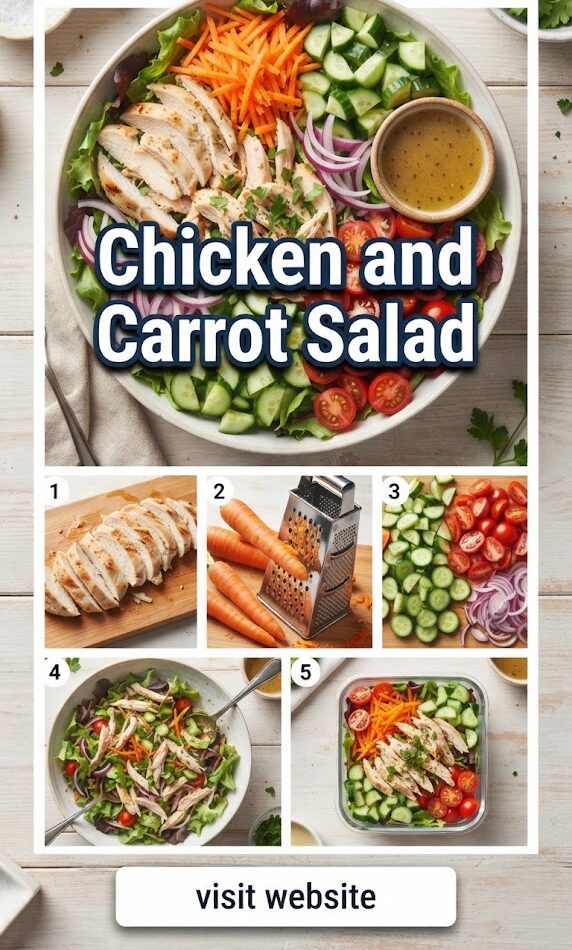
- Prepare the Chicken: Shred the cooked chicken into bite-sized pieces using two forks. If the chicken is still warm, let it cool to room temperature.
- Prep the Vegetables: In a large mixing bowl, combine the julienned carrots, shredded cabbage, and sliced red onion.
- Make the Dressing: In a small jar or bowl, whisk together the soy sauce, vinegar, sesame oil, sweetener, ginger, and garlic until emulsified.
- Combine: Pour the dressing over the vegetables and toss well. Add the shredded chicken and cilantro. Toss again gently.
- Garnish: Just before serving, sprinkle with sesame seeds or almonds to maintain their crunch.
Pro-Tips for Salad Success
1. The “Salt and Drain” Technique
If you are using a lot of raw carrots and cabbage, they can sometimes release water after being dressed, leading to a watery salad. To prevent this, toss your shredded carrots with a pinch of salt and let them sit in a colander for 10 minutes. Squeeze out the excess moisture before adding the dressing.
2. Acid is Your Friend
Carrots have a natural sweetness, and chicken is mild. To make the flavors “pop,” you need acidity. Always use fresh citrus (lime or lemon) or a high-quality vinegar (apple cider, rice, or white wine vinegar).
3. Don’t Over-Dress
A salad should be lightly coated, not swimming in liquid. Add your dressing in stages, tossing as you go, until the desired flavor profile is achieved.
4. Let it Marinate (But Not Too Long)
While leafy salads wilt instantly, carrot-based salads actually benefit from sitting for 15-30 minutes. This allows the carrots to soften slightly and absorb the flavors of the dressing. However, if you’re keeping it for the next day, store the dressing separately.
Meal Prep and Storage Guide
Chicken and carrot salad is the king of meal prep. Unlike lettuce, carrots stay crunchy for days.
- Fridge Life: A dressed chicken and carrot salad will stay fresh in an airtight container for up to 3 days.
- Separate Storage: For the best results over 5 days, keep the shredded chicken and carrots in one container and the dressing in a small jar. Mix them right before you head out the door.
- The Layering Trick: If using a Mason jar for lunch, put the dressing at the bottom, followed by the carrots, then the chicken, and finally any herbs or seeds at the very top. This prevents the delicate components from getting soggy.
Creative Add-Ins to Level Up Your Salad
Once you’ve mastered the basic chicken and carrot salad, start experimenting with these additions to change the flavor profile:
- Fruit: Sliced green apples, pear, or pomegranate seeds add a burst of sweetness and acidity.
- Creaminess: Add avocado slices, a dollop of Greek yogurt in the dressing, or crumbled feta cheese.
- Crunch: Beyond nuts, try crispy noodles, toasted panko breadcrumbs, or even crushed tortilla chips for a Tex-Mex twist.
- Heat: Fresh jalapeños, Sriracha, or a spoonful of chili crisp can transform the dish into a spicy delight.
The Role of Chicken and Carrot Salad in Different Diets
Low-Carb and Keto
This salad is naturally low in carbohydrates. To make it strictly Keto, ensure your dressing uses a healthy fat (like avocado oil or olive oil) and avoid sugars or honey. Use stevia or simply rely on the natural sweetness of the carrots.
Paleo and Whole30
For Paleo followers, swap soy sauce for coconut aminos and ensure your chicken is roasted in compliant oils. This salad provides the dense nutrients and proteins required by these lifestyles.
Gluten-Free
Since the main components are naturally gluten-free, this is a safe harbor for those with Celiac disease. Just be cautious of store-bought dressings or soy sauce (always choose Tamari).
Troubleshooting Common Issues
“My salad is too bland.”
- Solution: Increase the salt or acid. Often, a salad just needs an extra squeeze of lime or a pinch of sea salt to bring the flavors to life.
“The carrots are too tough.”
- Solution: Shred them finer. If you find raw carrots hard to chew, use the finest setting on your grater. Alternatively, give the carrots a quick 30-second blanch in boiling water followed by an ice bath.
“The chicken is dry.”
- Solution: This happens when chicken is overcooked. Next time, try poaching it. For your current salad, toss the chicken separately in a little bit of olive oil or a spoonful of the dressing before mixing it with the vegetables.
Sustainable and Ethical Choices
When preparing a dish with so few ingredients, the quality of those ingredients matters.
- The Carrots: Try to buy organic, bunch carrots (the ones with the green tops still attached). They are usually sweeter and more tender than the large, plastic-bagged “horse carrots.”
- The Chicken: Look for “Pasture-Raised” or “Air-Chilled” chicken. Air-chilled chicken hasn’t been soaked in chlorine water, meaning it retains better flavor and texture.
- The Oil: Use cold-pressed oils. Since the salad is raw, you will actually taste the quality of the olive or sesame oil you use.
Conclusion: The Versatile Legend
The Chicken and Carrot Salad is more than just a quick lunch; it is a testament to the beauty of simple ingredients. It bridges the gap between gourmet dining and functional nutrition. By mastering the balance of textures—the snap of the carrot against the tenderness of the chicken—and experimenting with global dressings, you can create a rotating menu of healthy meals that never feel repetitive.
Whether you’re serving it at a summer barbecue, packing it for a work lunch, or enjoying it as a post-workout recovery meal, this salad is a reliable, delicious, and incredibly healthy choice. So, grab your grater, poach some chicken, and start exploring the endless possibilities of this vibrant dish. Your body (and your taste buds) will thank you.