
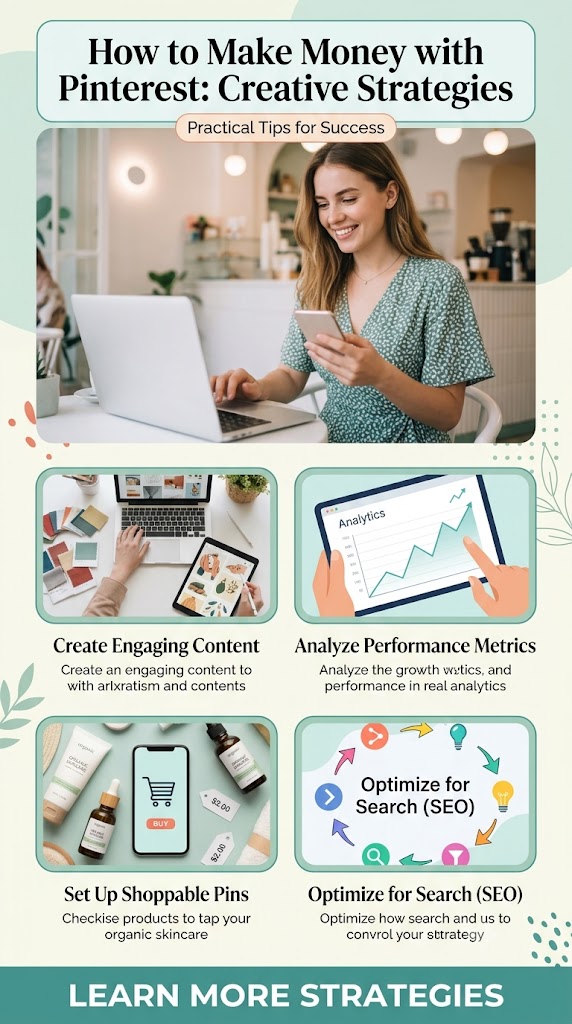
Turning Pins into a Full-Time Income
Pinterest is often misunderstood. To the casual user, it is a digital scrapbook for wedding inspiration, healthy recipes, and home decor ideas. To the savvy entrepreneur, however, Pinterest is a powerful visual search engine—a high-conversion traffic machine that rivals Google and YouTube.
Unlike Instagram or Facebook, where content has a shelf life of a few hours, a single Pin can drive traffic and generate revenue for years. This “long-tail” effect is what makes Pinterest one of the most lucrative platforms on the internet. In this comprehensive guide, we will dive deep into the strategies, tools, and mindsets required to turn your Pinterest presence into a consistent revenue stream.
1. Understanding the Pinterest Ecosystem: It’s Not Social Media
The first mistake most people make is treating Pinterest like social media. On social media, you chase likes, comments, and engagement. On Pinterest, you chase intent.
People go to Pinterest because they are looking for a solution, a product to buy, or a project to start. They are in a “planning mindset,” which means they are much closer to making a purchase than someone scrolling mindlessly through a Facebook feed.
Why Pinterest is a Goldmine:
- User Demographics: Pinterest users tend to have higher household incomes than users on other platforms.
- Buying Intent: 89% of people on Pinterest are there for inspiration in their path to purchase.
- Longevity: The average half-life of a tweet is 24 minutes. A Pin lasts about 3.5 months (and often much longer).
- Visual Search: Pinterest’s visual recognition technology allows users to find products simply by looking at images, bridging the gap between “I want that” and “I bought that.”
2. Setting the Foundation: The Business Account and SEO
Before you can make a dime, your profile needs to be professional and optimized for search.
Step 1: Create a Pinterest Business Account
If you have a personal account, convert it to a Business account or start a new one. This gives you access to:
- Pinterest Analytics: See exactly which pins are driving clicks.
- Pinterest Ads: Access to promoted pins.
- Rich Pins: These automatically sync information from your website to your pins (e.g., price and availability for products).
Step 2: Claim Your Website
Claiming your website is crucial. It tells Pinterest that you are a verified creator, which improves your ranking in the algorithm. It also adds your profile picture to every Pin saved from your site.
Step 3: Master Pinterest SEO
Pinterest is a search engine. To get found, you must use keywords.
- The Search Bar Method: Type a broad term (like “Healthy Recipes”) into the Pinterest search bar. The suggested terms that appear below it are the most searched keywords.
- Profile Optimization: Use keywords in your display name and bio.
- Board Titles and Descriptions: Avoid “cute” names. Instead of “My Favorite Things,” use “Modern Living Room Decor Ideas.”
- Pin Titles and Descriptions: Be descriptive. Use 2-3 relevant keywords and a clear call to action (CTA).
3. Strategy #1: Driving Traffic to a Monetized Blog
This is the classic way to make money on Pinterest. You create helpful content, pin it, and drive users back to your blog where you monetize through ads and affiliate links.
How to Execute:
- Identify a Niche: Focus on high-intent niches like Finance, DIY, Parenting, Travel, or Health.
- Create “Click-Worthy” Content: Write long-form articles that solve a problem. Examples: “10 Ways to Save $1000 This Month” or “The Ultimate 7-Day Keto Meal Plan.”
- Design Viral Pins: Use tools like Canva to create vertical pins (1000 x 1500 px). Use bold text overlays that promise a benefit.
- Monetize with Ads: Once you hit a certain traffic threshold, apply for premium ad networks like Mediavine or Raptive (formerly AdThrive). These networks pay significantly more than Google AdSense.
Why it works:
Pinterest is the #1 traffic source for many bloggers. By sending 50,000+ sessions a month to your site via Pinterest, you can easily earn $1,000–$5,000 per month in passive ad revenue alone.
4. Strategy #2: Affiliate Marketing (Without a Blog)
Can you make money on Pinterest if you don’t have a website? Yes. Pinterest allows direct affiliate links in many cases, provided you follow their guidelines.
Direct Pinning:
You can create a Pin for a product you love (e.g., a kitchen gadget from Amazon or a course from ShareASale) and put your affiliate link directly in the “Destination Link” field.
Pro Tips for Affiliate Pinning:
- Disclose, Disclose, Disclose: You must include
#ador#affiliatein your description to comply with FTC regulations. - Curated Boards: Create boards that look like gift guides or “Best of” lists.
- Bridge Pages: To avoid being flagged as spam, many experts recommend using a “Bridge Page” or a “Linktree” style landing page. This adds an extra layer of value and protects your account from being banned for excessive direct linking.
High-Paying Affiliate Programs for Pinterest:
- Amazon Associates: Great for physical products, though commissions are lower.
- ShareASale / Impact: Excellent for fashion, home goods, and software.
- Luxury Travel / Boutique Brands: Higher commissions for high-ticket items.
5. Strategy #3: Selling Your Own Digital Products
Digital products are the holy grail of online business. They have zero shipping costs, no inventory, and nearly 100% profit margins. Pinterest is the perfect catalog for these items.
Popular Digital Products on Pinterest:
- Printables: Budget trackers, meal planners, coloring pages, or educational worksheets for kids.
- Templates: Canva templates for social media, resume templates, or Pinterest Pin templates.
- E-books/Guides: “How to Start a Garden” or “The 30-Day Fitness Challenge.”
- Online Courses: Use Pinterest to drive traffic to a free webinar or a sales page for your course.
The Sales Funnel:
- The Hook: A Pin showing a beautiful preview of your digital product.
- The Lead Magnet: A free sample (e.g., a free one-page budget tracker) in exchange for their email address.
- The Sale: Email marketing sequence that eventually sells the full product.
6. Strategy #4: Selling Physical Products (E-commerce & Etsy)
If you have a Shopify store or an Etsy shop, Pinterest is non-negotiable.
Pinterest Catalogs and Shop Tabs:
By connecting your Shopify or Etsy store to Pinterest, you can turn your Pins into Product Pins. These show real-time pricing and stock availability. Pinterest even has a “Shop” tab on profiles, making it easy for users to browse your entire inventory.
Using “User-Generated Content” (UGC):
People trust other people more than brands. Encourage your customers to post photos of your products on Pinterest. You can then repin these to your own boards to build social proof.
7. Strategy #5: Becoming a Pinterest Virtual Assistant (VA)
Not everyone wants to be a creator; some people prefer to work behind the scenes. Because Pinterest is so complex and time-consuming, thousands of business owners are willing to pay someone else to manage it for them.
Services You Can Offer:
- Account Set-up and Audit: Charging a one-time fee to optimize a profile.
- Monthly Management: Handling daily pinning, keyword research, and analytics.
- Pin Design: Specializing in creating high-converting visuals.
- Promoted Pins Manager: Running paid ad campaigns for brands.
How Much Can You Earn?
A beginner Pinterest VA can charge $300–$500 per client per month. An experienced strategist can charge $1,000+ per month per client. Managing just five clients could result in a full-time income.
8. Strategy #6: Pinterest Creator Rewards and Brand Partnerships
While Pinterest’s native “Creator Rewards” program has fluctuated in availability, the concept of being a “Pinterest Influencer” is growing.
Brand Deals:
Brands are looking for “creators,” not just “influencers.” They want high-quality visual content that lives forever. You can partner with brands to create:
- Idea Pins: Multi-page pins that tell a story or show a tutorial.
- Sponsored Boards: A board curated specifically for a brand’s products.
- Video Pins: Showcasing a product in action.
Because Pins have a longer lifespan, you can often charge more for a Pinterest sponsorship than for an Instagram Story that disappears in 24 hours.
9. Technical Mastery: Creating High-Converting Pins
You can have the best product in the world, but if your Pin is ugly, no one will click. Pinterest is a visual platform, and aesthetics matter.
The Anatomy of a Perfect Pin:
- Vertical Aspect Ratio: 2:3 is the gold standard (e.g., 1000 x 1500 pixels). Square or horizontal pins get buried.
- High-Quality Imagery: Use bright, clear, and high-resolution photos. Avoid cluttered backgrounds.
- Text Overlay: Use bold, readable fonts. Contrast is key (e.g., white text on a dark overlay).
- Branding: Include your logo or website URL at the bottom of every Pin to build brand recognition and prevent content theft.
- Consistency: Use a consistent color palette so that when people see your Pin in their feed, they know it’s yours.
10. The Power of Automation: Tailwind and Scheduling
To succeed on Pinterest, you need to be consistent. Posting 5-10 times a day manually is exhausting and unsustainable. This is where automation tools come in.
Using Tailwind:
Tailwind is the industry-standard tool for Pinterest scheduling.
- SmartLoop: Automatically resharing your best-performing pins at optimal times.
- Communities (formerly Tribes): Groups of creators in the same niche who share each other’s content, giving you an immediate boost in reach.
- Analytics: Tailwind provides deeper insights than Pinterest’s native analytics, showing you exactly which boards are performing best.
The “Fresh Content” Rule:
Pinterest’s algorithm currently prioritizes “Fresh Pins.” A Fresh Pin is an image or video that Pinterest hasn’t seen before. You can link multiple Fresh Pins to the same blog post or product, as long as the visual design is different.
11. Understanding the Algorithm: How to Get Viral Reach
The Pinterest algorithm is based on two main factors: Domain Quality and Pin Quality.
Domain Quality:
Pinterest evaluates how much people trust your website. If users click your Pin, spend time on your site, and don’t immediately “bounce” back to Pinterest, your domain quality increases.
Pin Quality:
If a Pin gets a lot of saves (repins) and clicks, Pinterest recognizes it as high quality and shows it to more people.
Engagement Matters:
While you don’t need a million followers to go viral, the initial engagement from your followers acts as a “test.” If your followers interact with your Pin, Pinterest expands its reach to the “Home Feed” of non-followers and the search results.
12. Common Pitfalls and How to Avoid Them
Many people start Pinterest marketing and quit after a month because they don’t see results. Avoid these common traps:
- Giving Up Too Soon: Pinterest is a slow burn. It usually takes 3-6 months to see significant organic traffic.
- Being “Spammy”: Don’t pin the same image 50 times a day. Pinterest will shadowban your account.
- Ignoring Mobile Users: Over 80% of Pinterest users are on mobile. Make sure your text overlays are large enough to read on a small screen and your website is mobile-friendly.
- Bad Landing Pages: If your Pin promises a “Free Budget Planner” but the link takes the user to a generic homepage, they will leave immediately, hurting your ranking.
- Neglecting Trends: Use Pinterest Trends (trends.pinterest.com) to see what is trending seasonally. Start pinning holiday content in September!
13. Scaling Your Pinterest Business
Once you have a strategy that works, it’s time to scale.
Diversify Your Niches:
If you’ve mastered the “Home Decor” niche, consider starting a second account in the “Personal Finance” or “Tech” niche. The same SEO principles apply across the board.
Invest in Promoted Pins:
Pinterest Ads (Promoted Pins) are often cheaper than Facebook or Google Ads. Because you can target by specific keywords, you can put your product directly in front of people who are actively searching for it.
Build an Email List:
Never rely solely on a platform you don’t own. Use Pinterest to drive traffic to a landing page where you collect email addresses. This allows you to sell to your audience over and over again, regardless of algorithm changes.
14. Case Study: From 0 to $2,000/Month
Let’s look at a hypothetical (but realistic) roadmap for a new Pinterest entrepreneur:
- Month 1: Set up Business account, claim website, and create 10 boards with 10 pins each. Start pinning 3-5 times a day.
- Month 2: Join Tailwind Communities. Start noticing small trickles of traffic (50-100 visitors a day). Sign up for basic affiliate programs.
- Month 3: One Pin goes “mini-viral,” driving 1,000 visitors in a day. You make your first $50 in affiliate commissions.
- Month 6: You have 50 blog posts and 500 unique Pins. Traffic stabilizes at 25,000 sessions a month. You apply for an ad network. Total income: $400/month.
- Month 12: With consistent pinning and SEO optimization, you hit 100,000 sessions a month. Between ads, affiliate links, and your own $27 digital ebook, you are consistently earning $2,000 – $3,000 per month.
15. Conclusion: Your Long-Term Pinterest Strategy
Making money on Pinterest is not a “get rich quick” scheme. It is a content marketing strategy that rewards patience, high-quality visuals, and a deep understanding of user intent.
Whether you are a blogger, an e-commerce owner, or a freelance VA, the opportunity on Pinterest is massive. By shifting your mindset from “posting photos” to “solving problems through search,” you position yourself to capture a share of the billions of dollars influenced by Pinterest every year.
Start today. Optimize your profile, research your keywords, and create your first five “Fresh Pins.” The traffic—and the revenue—is waiting for you.
Summary Checklist for Success:
- Convert to a Business Account.
- Claim your website/Etsy/Shopify.
- Research 20-30 high-volume keywords in your niche.
- Create 10-15 highly relevant boards with keyword-rich descriptions.
- Design 3-5 Pin templates in Canva.
- Set up a scheduling tool like Tailwind.
- Analyze your Pinterest Analytics monthly to see what’s working.
- Be patient and consistent.