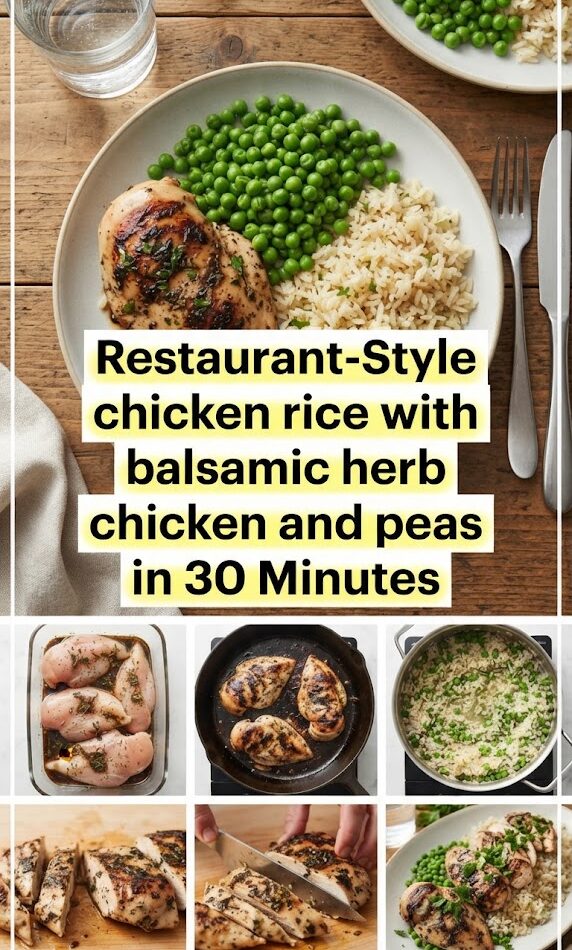
Restaurant-Style Chicken Rice with Balsamic Herb Chicken and Peas in 30 Minutes
Restaurant-Style Chicken Rice with Balsamic Herb Chicken and Peas is an easy, flavorful dinner that brings together tender balsamic herb chicken, fluffy seasoned rice, sweet green peas, garlic, fresh herbs, and a delicious savory pan sauce. It has the polished flavor of a restaurant meal but is simple enough to make on a busy weeknight.
This 30-minute chicken and rice recipe is perfect when you want a satisfying homemade dinner without spending hours in the kitchen. The chicken is quickly seasoned with herbs, garlic, balsamic vinegar, and olive oil before being pan-seared until beautifully golden. Meanwhile, fluffy rice and bright green peas create an easy side that soaks up the flavorful juices from the chicken.
The combination of tangy balsamic vinegar, aromatic herbs, garlic, and juicy chicken gives this recipe a Mediterranean-inspired flavor while keeping the ingredients familiar and easy to find at most American grocery stores.
Why You’ll Love This Chicken Rice Recipe
There are plenty of reasons to make this balsamic chicken and rice dinner part of your regular meal rotation.
First, it is genuinely quick. With a little preparation, you can have dinner on the table in about 30 minutes. That makes it especially useful for busy weeknights when you need something homemade but don’t want an elaborate recipe.
Second, the flavor is much more impressive than the amount of effort required. Balsamic vinegar adds a pleasant sweet-tart flavor to the chicken, while garlic, Italian herbs, and black pepper create a savory coating. Searing the chicken in a hot skillet develops a golden exterior and creates flavorful browned bits in the pan.
The rice provides a mild, comforting base that balances the bold chicken. Green peas add natural sweetness, color, and texture, making the finished dish look bright and inviting.
Most importantly, this is a flexible family dinner. You can use chicken breasts or boneless chicken thighs, swap white rice for brown rice, add extra vegetables, or adjust the herbs according to what you already have in your kitchen.
Ingredients You’ll Need
For the Balsamic Herb Chicken
- 1 1/4 pounds boneless, skinless chicken breasts or thighs
- 2 tablespoons balsamic vinegar
- 1 tablespoon olive oil
- 3 garlic cloves, minced
- 1 teaspoon dried Italian seasoning
- 1/2 teaspoon dried oregano
- 1/2 teaspoon dried thyme
- 1/2 teaspoon paprika
- 1/2 teaspoon kosher salt
- 1/4 teaspoon freshly ground black pepper
- 1 teaspoon honey or maple syrup, optional
- 1 tablespoon butter
For the Rice and Peas
- 1 1/2 cups cooked long-grain white rice
- 1 cup frozen green peas
- 1 tablespoon olive oil or butter
- 1 garlic clove, minced
- 1/4 cup low-sodium chicken broth
- 1/2 teaspoon Italian seasoning
- Salt and black pepper to taste
- 1 tablespoon chopped fresh parsley
Optional Garnishes
- Fresh parsley
- Fresh basil
- Lemon wedges
- A light drizzle of balsamic glaze
- Freshly grated Parmesan cheese
- Cracked black pepper
- Red pepper flakes
Choosing the Best Chicken
Boneless, skinless chicken breasts are an excellent choice because they cook quickly and work beautifully with the balsamic herb marinade. If your chicken breasts are particularly thick, slice them horizontally into thinner cutlets or gently pound them to an even thickness.
This helps the chicken cook more evenly and makes it easier to finish the recipe within 30 minutes.
Boneless chicken thighs are another excellent option. They tend to be naturally juicy and flavorful and are more forgiving if cooked for an extra minute or two.
Whichever cut you choose, avoid relying solely on appearance to determine whether the chicken is done. USDA guidance recommends cooking poultry to a minimum internal temperature of 165°F, measured with a food thermometer in the thickest portion.
How to Make Restaurant-Style Chicken Rice
Step 1: Prepare the Chicken
Begin by patting the chicken dry with paper towels. Removing excess surface moisture helps the chicken brown more effectively in the skillet.
If using chicken breasts, make sure they are reasonably even in thickness. You can gently pound thicker portions with a meat mallet until the chicken is approximately the same thickness throughout.
Place the chicken in a bowl.
Add balsamic vinegar, olive oil, minced garlic, Italian seasoning, oregano, thyme, paprika, salt, black pepper, and honey if using.
Toss until the chicken is evenly coated.
You do not need to marinate the chicken for hours. Because this is a quick weeknight recipe, even 5 to 10 minutes while you prepare the rice is enough to add flavor.
Step 2: Start the Rice
If you already have cooked rice, this recipe becomes especially fast.
Warm a large skillet or saucepan over medium heat. Add olive oil or butter followed by minced garlic.
Cook the garlic for about 30 seconds, just until fragrant. Be careful not to let it become dark brown or burnt.
Add the cooked rice, frozen peas, chicken broth, Italian seasoning, salt, and black pepper.
Stir everything together.
Cover and cook for several minutes, stirring occasionally, until the peas are heated through and the rice is fluffy.
If your rice seems dry, add another tablespoon or two of chicken broth. The goal is moist, fluffy rice rather than wet or mushy rice.
Turn the heat to low and keep the rice covered while you cook the chicken.
Step 3: Sear the Chicken
Heat a large skillet over medium-high heat.
Add a tablespoon of olive oil.
Once the pan is hot, carefully place the chicken into the skillet. Avoid overcrowding the pan. If necessary, cook the chicken in two batches.
Let the chicken cook without moving it for approximately 3 to 5 minutes, depending on thickness.
Once the underside develops a deep golden-brown crust, turn the chicken over.
Continue cooking until the chicken is cooked through.
For food safety, use an instant-read thermometer to verify that the thickest part of the chicken has reached 165°F. USDA guidance notes that color and firmness alone are not reliable indicators of poultry safety.
Transfer the cooked chicken to a clean plate and let it rest briefly.
Step 4: Create the Quick Balsamic Pan Sauce
Do not clean the skillet yet.
The browned bits left behind from the chicken contain concentrated flavor.
Reduce the heat to medium-low.
Add butter and a splash of balsamic vinegar.
Stir with a wooden spoon or spatula, scraping the bottom of the pan.
Add a small splash of chicken broth if needed.
Allow the mixture to simmer gently for about 1 to 2 minutes.
The balsamic vinegar should become slightly thicker and glossy. If you prefer a sweeter sauce, add a small amount of honey.
Taste and adjust the seasoning with black pepper or a pinch of salt.
Step 5: Assemble the Chicken Rice Bowls
Spoon a generous portion of the rice and peas onto each plate or shallow bowl.
Slice the chicken into strips or serve the chicken pieces whole.
Place the balsamic herb chicken over the rice.
Spoon some of the pan sauce over the chicken and rice.
Finish with fresh parsley, basil, cracked black pepper, or a light drizzle of balsamic glaze.
Serve immediately.
The Secret to Big Restaurant-Style Flavor
The secret isn’t complicated ingredients. It is the way the ingredients are cooked.
A few simple techniques make a major difference.
Use a Hot Skillet
A properly heated skillet helps the chicken develop a golden-brown exterior.
If the pan is too cool, the chicken may release moisture and begin steaming instead of searing.
Don’t Overcrowd the Pan
Chicken needs enough room for hot air and heat to circulate around each piece. If too much chicken is packed into the skillet, the temperature can drop significantly.
Cooking in batches may take a couple of extra minutes, but it produces better browning.
Use the Pan Drippings
The browned bits remaining after cooking the chicken are extremely valuable for flavor.
Adding balsamic vinegar, butter, and a little broth turns those browned bits into a quick sauce without requiring a separate saucepan.
Balance Acid and Sweetness
Balsamic vinegar is naturally acidic and slightly sweet. A small amount of honey can create a beautifully balanced glaze.
Don’t add too much. You want the balsamic flavor to remain noticeable without making the chicken taste sugary.
What Type of Rice Works Best?
Long-grain white rice is an easy choice because it cooks quickly and stays fluffy.
Basmati rice works especially well if you enjoy aromatic rice. Jasmine rice can also be used and provides a softer, slightly fragrant texture.
Brown rice is a nutritious alternative, although it generally takes longer to prepare from raw. For a true 30-minute meal, use pre-cooked brown rice or leftover rice.
You can also use leftover refrigerated rice. In fact, leftover rice often works particularly well in skillet recipes because the grains are less likely to become mushy.
Can You Use Cauliflower Rice?
Absolutely.
For a lower-carbohydrate variation, replace the cooked rice with cauliflower rice.
Sauté the cauliflower rice with garlic, olive oil, Italian seasoning, and peas until tender.
Because cauliflower rice releases moisture as it cooks, avoid adding too much chicken broth.
The result is a lighter version of the original dish while keeping the same balsamic herb chicken.
Can You Use Frozen Peas?
Yes.
Frozen peas are one of the easiest vegetables for quick dinners because they require almost no preparation.
Simply add them directly to the warm rice during the final few minutes of cooking.
There is no need to thaw them first.
For additional vegetables, consider adding:
- Diced bell peppers
- Baby spinach
- Broccoli
- Chopped zucchini
- Mushrooms
- Carrots
- Asparagus
- Cherry tomatoes
For a 30-minute meal, choose vegetables that cook quickly.
How to Make the Chicken Extra Juicy
Chicken breast can become dry when overcooked.
The first step is choosing pieces with an even thickness.
The second is controlling the skillet temperature.
The third is using a thermometer rather than guessing.
Cook the chicken until it reaches the USDA-recommended minimum internal temperature of 165°F.
Once cooked, transfer it to a clean plate and allow it to rest briefly before slicing.
Cutting immediately can allow more juices to escape.
Can You Make This Recipe Ahead?
Yes.
The rice and peas can be prepared ahead of time and stored in the refrigerator.
The chicken can also be cooked ahead, cooled promptly, and refrigerated.
When storing cooked chicken and rice, USDA guidance recommends refrigerating perishable foods promptly and using most cooked leftovers within 3 to 4 days. Leftovers should be reheated to 165°F.
For meal prep, divide the rice, peas, and chicken into individual airtight containers.
Keep the balsamic sauce in a small separate container if possible.
When ready to eat, reheat thoroughly and spoon the sauce over the chicken just before serving.
Easy Meal Prep Instructions
This recipe is excellent for weekday lunches.
Prepare four meal-prep containers.
Add approximately 1 cup of rice and peas to each container.
Slice the cooked chicken and divide it evenly among the containers.
Add a small amount of balsamic sauce.
Allow the food to cool appropriately before sealing and refrigerating.
For the best texture, add fresh herbs after reheating.
You can also keep the sauce separate and add it after reheating so the chicken remains flavorful without becoming overly soft.
How to Store Leftovers
Place leftover chicken and rice in shallow airtight containers and refrigerate promptly.
USDA recommends refrigerating perishable foods promptly and advises against leaving cooked food at room temperature for extended periods.
Use refrigerated leftovers within 3 to 4 days.
When reheating, make sure the food reaches 165°F.
If the rice becomes slightly dry, add a tablespoon of chicken broth before reheating.
Can You Freeze Chicken and Rice?
Yes, although the texture of the rice may change slightly after freezing and reheating.
For best results, cool the cooked food promptly and portion it into freezer-safe containers.
Freeze for convenient future meals.
Thaw safely in the refrigerator before reheating when possible.
Add a little chicken broth during reheating to restore moisture.
The balsamic sauce can also be frozen separately, although freshly prepared sauce will generally have the best texture.
Flavor Variations
One of the best things about this chicken rice recipe is how easy it is to customize.
Lemon Balsamic Chicken Rice
Add fresh lemon zest and a squeeze of lemon juice to the finished dish.
The bright citrus flavor works beautifully with balsamic vinegar and herbs.
Spicy Balsamic Chicken
Add crushed red pepper flakes or cayenne pepper to the chicken seasoning.
For more heat, add a little hot sauce to the pan sauce.
Creamy Balsamic Chicken Rice
For a richer variation, stir a tablespoon or two of heavy cream into the finished pan sauce.
You can also add Parmesan cheese for a creamy, savory finish.
Mediterranean Chicken Rice
Add chopped tomatoes, cucumber, parsley, oregano, and a little feta cheese.
This creates a fresh Mediterranean-style bowl.
Mushroom Balsamic Chicken
Sauté sliced mushrooms after cooking the chicken.
Return the chicken to the skillet and finish everything with balsamic sauce.
Mushrooms absorb the balsamic flavor particularly well.
Garlic Parmesan Chicken Rice
Add extra garlic and finish the rice with freshly grated Parmesan.
This variation is comforting and family-friendly.
What to Serve With Balsamic Chicken Rice
Because this meal already contains protein, carbohydrates, and peas, it can easily be served on its own.
If you want to expand the meal, consider serving it with:
- Simple green salad
- Roasted broccoli
- Garlic green beans
- Steamed asparagus
- Roasted carrots
- Cucumber tomato salad
- Crusty bread
- Fresh fruit
A crisp salad with a simple lemon vinaigrette is especially good because its acidity complements the rich balsamic chicken.
Tips for Making This Recipe in 30 Minutes
The key to finishing dinner quickly is multitasking.
Start by preparing the chicken seasoning.
While the chicken sits for a few minutes, begin heating the rice.
Use cooked or leftover rice to save time.
While the rice warms, sear the chicken.
As the chicken rests, make the balsamic pan sauce.
Then assemble everything.
This workflow allows several parts of the meal to happen simultaneously.
Another useful shortcut is to keep frozen peas in your freezer. They can be added directly to the rice without washing, chopping, or thawing.
Common Mistakes to Avoid
Overcooking the Chicken
Chicken breast can become dry if cooked for too long.
Use a thermometer instead of relying on cooking time alone.
Burning the Garlic
Garlic cooks quickly. Add it over moderate heat and stir frequently.
Burnt garlic can make the entire dish taste bitter.
Adding Too Much Balsamic Vinegar
Balsamic vinegar is powerful.
Start with a moderate amount and add more if necessary.
Making the Rice Too Wet
The rice should be fluffy rather than soupy.
Add broth gradually.
Skipping the Pan Sauce
The quick balsamic pan sauce is one of the easiest ways to make the dish taste restaurant-quality.
Those browned bits in the skillet are full of flavor, so take advantage of them.
How to Make the Presentation Look Restaurant-Quality
Presentation can make a simple homemade meal feel special.
Instead of mixing everything together, create layers.
Start with a bed of fluffy rice and peas.
Arrange sliced chicken on top.
Drizzle the balsamic sauce across the chicken rather than pouring it heavily over everything.
Finish with fresh parsley or basil.
A few cracks of black pepper add visual contrast.
For a special dinner, add a small lemon wedge on the side.
You can also finish with a very light drizzle of balsamic glaze.
Frequently Asked Questions
Is balsamic vinegar good with chicken?
Yes. Balsamic vinegar pairs especially well with chicken because its sweet-tart flavor balances the mild taste of poultry. Garlic, oregano, thyme, and Italian seasoning complement the vinegar beautifully.
Can I use chicken thighs instead of chicken breast?
Absolutely. Boneless, skinless chicken thighs are an excellent substitute and often produce especially juicy results.
Can I use brown rice?
Yes. Brown rice provides a heartier texture and more pronounced nutty flavor. To keep the meal within 30 minutes, use pre-cooked brown rice.
Can I use frozen peas?
Yes. Frozen peas can go directly into the warm rice and cook quickly.
How do I know when chicken is fully cooked?
The safest method is to use a food thermometer. USDA guidance recommends that all poultry reach a minimum internal temperature of 165°F.
Can I make this gluten-free?
The basic ingredients can fit a gluten-free diet, but always check the labels of packaged seasonings, broth, and other processed ingredients to ensure they meet your dietary requirements.
Can I make it dairy-free?
Yes. Simply use olive oil instead of butter and skip Parmesan cheese.
Can I make this recipe spicy?
Yes. Add crushed red pepper flakes, cayenne pepper, or your favorite hot sauce.
Is this good for meal prep?
Yes. The chicken, rice, and peas store well when handled and refrigerated properly, making this an excellent weekday lunch option.
Nutrition-Friendly Customizations
If you’re looking for a lighter version, there are several easy changes.
Use skinless chicken breast.
Choose brown rice or cauliflower rice.
Increase the peas and add extra vegetables.
Use olive oil instead of butter.
Keep the balsamic sauce light.
Add fresh herbs for flavor without relying heavily on additional salt.
You can also increase the vegetable-to-rice ratio to create a more balanced bowl.
A Simple Weeknight Dinner Everyone Can Enjoy
One of the biggest advantages of this recipe is that it doesn’t taste like a compromise.
The chicken is savory and juicy.
The balsamic vinegar adds brightness.
The herbs make the dish aromatic.
The rice provides a comforting base.
The peas add sweetness and color.
Together, these simple ingredients create a complete meal with plenty of texture and flavor.
It’s the kind of recipe that works equally well for a casual family dinner, meal prep lunch, or an easy date-night meal at home.
Final Thoughts
Restaurant-Style Chicken Rice with Balsamic Herb Chicken and Peas proves that a flavorful dinner doesn’t have to require complicated techniques or a long ingredient list.
In approximately 30 minutes, you can create tender herb-seasoned chicken with a glossy balsamic pan sauce, fluffy garlic rice, and sweet green peas.
The recipe is flexible, affordable, family-friendly, and easy to customize. Use chicken breasts for a leaner option, chicken thighs for extra juiciness, brown rice for a heartier meal, or cauliflower rice for a lighter alternative.
The biggest flavor secret is simple: properly sear the chicken, then use the flavorful browned bits left in the skillet to create the balsamic pan sauce.
For food safety, always verify that chicken reaches 165°F internally with a food thermometer, as recommended by USDA guidance.
Serve the chicken over warm rice and peas, garnish with fresh herbs, and enjoy a homemade dinner that looks and tastes far more elaborate than the 30-minute preparation time suggests.
Quick Recipe Card
Recipe: Restaurant-Style Chicken Rice with Balsamic Herb Chicken and Peas
Prep Time: 10 minutes
Cook Time: 20 minutes
Total Time: 30 minutes
Servings: 4
Cuisine: American-inspired / Mediterranean-inspired
Category: Dinner, Chicken Recipes, Rice Recipes
Difficulty: Easy
Ingredients
- 1 1/4 pounds boneless skinless chicken
- 2 tablespoons balsamic vinegar
- 1 tablespoon olive oil
- 3 garlic cloves
- 1 teaspoon Italian seasoning
- 1/2 teaspoon oregano
- 1/2 teaspoon thyme
- 1/2 teaspoon paprika
- Salt and pepper
- 1 teaspoon honey, optional
- 1 tablespoon butter
- 1 1/2 cups cooked rice
- 1 cup frozen peas
- 1/4 cup chicken broth
- Fresh parsley
Directions
- Pat chicken dry and season with balsamic vinegar, olive oil, garlic, herbs, paprika, salt, pepper, and optional honey.
- Warm cooked rice with garlic, peas, chicken broth, Italian seasoning, salt, and pepper.
- Heat olive oil in a skillet and sear chicken until golden and cooked through.
- Verify the chicken reaches 165°F internally.
- Remove chicken and make a quick pan sauce with butter, balsamic vinegar, and chicken broth.
- Spoon rice and peas into bowls.
- Add sliced chicken.
- Drizzle with balsamic pan sauce.
- Garnish with fresh parsley and cracked black pepper.
- Serve immediately.
SEO Information
Primary SEO Keyword:
Restaurant-style chicken rice
Secondary Keywords:
- balsamic herb chicken
- chicken and rice recipe
- chicken rice recipe in 30 minutes
- easy chicken dinner
- 30 minute chicken dinner
- balsamic chicken recipe
- chicken breast and rice
- chicken and peas recipe
- easy weeknight chicken recipe
- restaurant-style chicken recipe
- quick chicken dinner
- healthy chicken and rice
- skillet chicken and rice
- easy family dinner
- Mediterranean chicken and rice
- garlic herb chicken
- balsamic chicken and rice
- easy rice bowl recipe
- quick family meals
- weeknight dinner recipes
Long-Tail SEO Keywords:
- restaurant-style chicken rice with balsamic herb chicken
- easy balsamic chicken and rice recipe
- chicken rice with peas in 30 minutes
- quick balsamic herb chicken dinner
- easy chicken breast rice bowl recipe
- restaurant-style chicken dinner at home
- 30 minute chicken and rice dinner
- easy balsamic chicken recipe for weeknights
- chicken and rice recipes for busy families
- flavorful chicken and rice skillet recipe