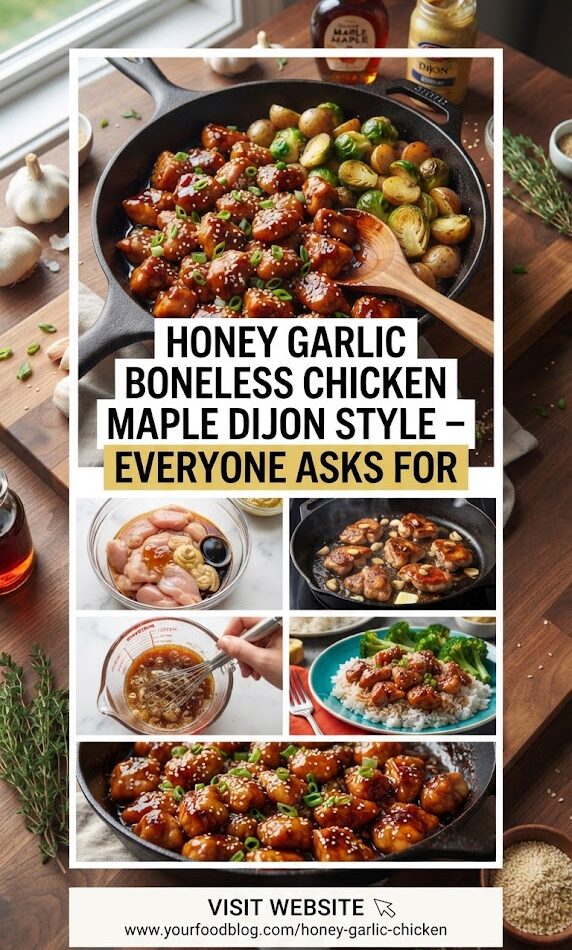
There is a specific kind of magic that happens in a kitchen when the sharp, pungent aroma of fresh garlic hits a hot pan of sizzling chicken. But when you introduce the floral sweetness of honey, the earthy depth of pure maple syrup, and the sophisticated tang of Dijon mustard, you aren’t just making dinner—you are creating an obsession.
The “Honey Garlic Boneless Chicken Maple Dijon Style” has become a viral sensation for a reason. It bridges the gap between comfort food and gourmet dining. It’s the dish that gets requested at every potluck, the meal that makes your family cheer on a Tuesday night, and the recipe that friends text you for before they’ve even finished their first serving.
In this comprehensive guide, we will dive deep into why this flavor profile works, the science behind the perfect glaze, and the step-by-step techniques to ensure your chicken is succulent, crispy, and dripping with gold every single time.
Why This Flavor Profile is a Game Changer
Most people are familiar with standard honey garlic chicken. It’s a staple of takeout menus everywhere. However, the addition of Maple and Dijon elevates the dish from a simple sweet-and-sour profile to a complex, multi-layered masterpiece.
The Sweetness: Honey vs. Maple Syrup
While both are sweeteners, they play different roles. Honey provides a thick, viscous texture that clings to the chicken, creating that iconic “sticky” finish. Pure maple syrup (Grade A Amber is best) adds a woody, caramel-like undertone that honey lacks. Together, they create a depth of sweetness that isn’t cloying but rather rich and sophisticated.
The Acid and Spice: Dijon Mustard
Without an acidic element, a honey-based sauce can feel heavy. Dijon mustard provides two essential things: acidity and emulsification. The vinegar in the mustard cuts through the sugar, while the mustard seeds add a tiny bit of heat and a sharp, savory bite that balances the garlic.
The Aromatic: Fresh Garlic
In this recipe, garlic isn’t just a background note; it’s a lead actor. Using fresh cloves—rather than powder—ensures that the oils infuse into the fat of the chicken, creating a fragrant base that ties the maple and mustard together.
The Essential Ingredient Breakdown
To achieve the “Everyone Asks For” status, you cannot cut corners on ingredients. Here is what you need and why it matters.
1. The Chicken: Thighs vs. Breasts
For the most succulent results, boneless, skinless chicken thighs are the gold standard. Thigh meat has a higher fat content, meaning it stays juicy even under the high heat required to caramelize the sauce. However, if you prefer chicken breasts, we will discuss the “velveting” technique later to ensure they don’t dry out.
2. Pure Maple Syrup
Avoid “pancake syrup,” which is mostly high-fructose corn syrup. You want 100% pure maple syrup. The natural minerals in real maple syrup react with the heat to create a complex flavor profile that imitation syrups simply cannot replicate.
3. Raw, Unfiltered Honey
If possible, use local honey. It tends to have a more robust flavor and a better consistency for thickening sauces.
4. Dijon Mustard
Smooth Dijon is preferred over the grainy variety for this specific glaze, as it creates a silky-smooth coating that envelopes every nook and cranny of the chicken.
5. Fresh Garlic
You will need at least 4 to 6 cloves. Mincing them finely allows them to distribute evenly, while smashing them slightly before mincing releases more of the essential oils.
6. The “Crisp” Factor: Cornstarch or Arrowroot
To get that slight “crunch” without deep-frying, a light dusting of cornstarch on the chicken before searing is the secret weapon. It creates a barrier that captures the sauce.
Step-by-Step Guide to Perfection
Step 1: Prepping the Protein
Start by patting your boneless chicken dry with paper towels. Moisture is the enemy of a good sear. Cut the chicken into bite-sized 1-inch pieces. Toss them in a bowl with salt, cracked black pepper, and a tablespoon of cornstarch. Shake off any excess; you want a translucent veil of starch, not a heavy batter.
Step 2: The Sizzling Sear
Heat a large cast-iron or heavy-bottomed stainless steel skillet over medium-high heat. Add a high-smoke-point oil (like avocado or grapeseed oil). Work in batches to avoid overcrowding the pan. You want each piece of chicken to have enough space to brown. Sear for 3–4 minutes per side until a golden-brown crust forms. Remove the chicken and set it aside.
Step 3: Building the Flavor Base
Lower the heat to medium. In the same pan, add a small knob of butter. Once melted, toss in your minced garlic. Sauté for only 30–60 seconds. You want it fragrant and translucent—if it turns dark brown or black, it will become bitter and ruin the sauce.
Step 4: The Glaze Synthesis
Whisk together your honey, maple syrup, Dijon mustard, and a splash of soy sauce (for umami) or apple cider vinegar (for extra tang). Pour this mixture into the pan with the garlic. Let it simmer for 2–3 minutes. You will see the bubbles transition from small and watery to large, slow, and “sticky” looking.
Step 5: The Reunion
Add the chicken back into the pan. Toss vigorously to coat every piece. The cornstarch from the chicken will interact with the sugars in the sauce, thickening it instantly into a glossy, mahogany glaze. Let it cook together for another 2 minutes so the flavors penetrate the meat.
Variations: Personalizing Your Masterpiece
While the classic Honey Garlic Maple Dijon is perfect as is, you can adapt it to suit your specific palate or dietary needs.
The Spicy Kick
Add a teaspoon of red pepper flakes or a squeeze of Sriracha to the sauce. The heat of the chili peppers cuts through the sweetness of the maple beautifully.
The Herb-Infused Version
Fresh rosemary or thyme pairs exceptionally well with maple. Adding a sprig of rosemary to the pan while the sauce simmers imparts an earthy, piney aroma that makes the dish feel very “autumnal” and upscale.
The Citrus Twist
A squeeze of fresh lemon juice or a bit of orange zest at the very end can brighten the entire dish, adding a high note that balances the deep, heavy sugars.
Air Fryer Method
For a healthier version, toss the starched chicken in the air fryer at 400°F (200°C) for 12–15 minutes until crispy. Meanwhile, simmer the sauce on the stove and toss the crispy chicken in the sauce just before serving.
The Secret Science: Why This Recipe Works
To understand why this recipe is so successful, we have to look at the Maillard Reaction and Caramelization.
The Maillard reaction occurs between amino acids and reducing sugars when meat is browned. By dusting the chicken in cornstarch and searing it, you are maximizing the surface area for this reaction to occur.
Then comes caramelization. Maple syrup and honey have different sugar structures (primarily sucrose in maple and fructose/glucose in honey). By combining them, you are creating a wider spectrum of caramelization temperatures. This results in a sauce that has “levels” of flavor—from the bright sweetness of honey to the deep, burnt-sugar notes of maple.
The Dijon mustard acts as a bridge. It contains vinegar, which acts as a solvent for the flavors, and mustard flour, which helps the oil-based fats from the chicken mix with the water-based sugars of the honey. This is why the sauce looks so creamy and unified rather than oily and separated.
Expert Tips for Success
- Don’t Overcook the Garlic: As mentioned, garlic burns easily. If your pan is too hot after searing the chicken, take it off the heat for a minute before adding the garlic.
- Deglaze the Pan: Use the liquid sauce to scrape up the “fond” (the brown bits) left at the bottom of the pan after searing the chicken. That fond is concentrated flavor.
- Use a Meat Thermometer: Boneless thighs are done at 165°F (74°C), but they can actually handle up to 175°F (80°C) and remain juicy. Breasts, however, must be pulled exactly at 165°F to avoid a “rubbery” texture.
- The Rest Period: Let the chicken sit for 3 minutes after cooking. This allows the fibers to relax and reabsorb the juices, ensuring every bite is moist.
Perfect Pairings: What to Serve with Maple Dijon Chicken
This dish is flavor-forward, so your sides should either be neutral to soak up the sauce or bright to provide contrast.
1. Fluffy Basmati or Jasmine Rice
The classic choice. The long grains stay separate and act as a sponge for the honey-maple glaze. For a nutritional boost, try nutty brown rice or quinoa.
2. Garlic Mashed Potatoes
If you want the ultimate comfort meal, serve the chicken over creamy mashed potatoes. The tang of the Dijon in the chicken sauce complements the buttery richness of the potatoes perfectly.
3. Roasted Brussels Sprouts or Broccoli
The slight bitterness of charred green vegetables is the perfect foil for the sweetness of the chicken. Toss the veggies in olive oil and salt, roast them until the edges are crispy, and serve them right alongside the chicken.
4. A Crisp Green Salad
A simple arugula salad with a light lemon vinaigrette provides a refreshing crunch that cleanses the palate between bites of the rich, sticky chicken.
Storage and Meal Prep Tips
This recipe is a meal prepper’s dream because the flavors actually deepen the next day.
- Refrigeration: Store in an airtight container for up to 4 days.
- Reheating: To maintain the texture, avoid the microwave if possible. Instead, reheat in a skillet over low heat with a tablespoon of water or chicken broth to loosen the sauce.
- Freezing: You can freeze the cooked chicken in the sauce for up to 3 months. Thaw overnight in the fridge before reheating.
Frequently Asked Questions (FAQ)
Can I use bone-in chicken?
Yes, but the cooking time will increase significantly. You will need to sear the skin first, then likely finish the chicken in the oven at 375°F for 20–25 minutes before tossing it in the sauce.
Is this recipe gluten-free?
It can be! Simply ensure you are using a gluten-free tamari instead of soy sauce and check that your Dijon mustard is certified gluten-free.
Can I substitute the honey for more maple syrup?
You can, but the sauce will be thinner. Honey provides the “tackiness” that helps the glaze stick. If you use only maple syrup, you may need to simmer the sauce longer to reduce it further.
My sauce turned out too thick. How do I fix it?
Simply whisk in a tablespoon of warm water or chicken stock at a time until you reach your desired consistency.
The Cultural Context of Fusion Cooking
The Honey Garlic Maple Dijon Chicken is a prime example of Modern American Fusion. It takes the Asian-inspired honey-garlic profile, popularized in Chinese-American cuisine, and marries it with the quintessential North American flavors of the Canadian and New England maple forests.
This blend of cultures and ingredients represents the modern kitchen—one where boundaries are fluid, and the goal is simply “deliciousness.” This recipe doesn’t belong to one tradition; it belongs to the global pantry.
Final Thoughts: The Dish That Defines “Home Cooked”
There is something deeply satisfying about mastering a dish that makes people feel cared for. The Honey Garlic Boneless Chicken Maple Dijon Style is more than just a combination of ingredients; it’s a sensory experience. It’s the sound of the sear, the sight of the glistening glaze, and the unmistakable taste of a balanced, well-thought-out meal.
Whether you are cooking for a first date, a hungry family of five, or just meal-prepping for a busy week ahead, this recipe provides a reliability and “wow factor” that few other dishes can match. Once you master the balance of the sweet maple, the sharp Dijon, and the pungent garlic, you’ll understand exactly why everyone keeps asking for it.
Pro Tip: Always make a double batch of the sauce. You’ll want to drizzle it over everything from roasted carrots to your morning eggs. Yes, it really is that good.
Detailed Nutritional Overview (Per Serving)
While this dish is indulgent, it provides excellent nutritional value, especially when paired with the right sides.
- Protein: High-quality protein from chicken is essential for muscle repair and satiety.
- Garlic: Known for its antimicrobial and anti-inflammatory properties.
- Honey/Maple: While sugars, they provide immediate energy and contain antioxidants that refined sugars lack.
- Mustard: Low in calories but high in minerals like selenium and magnesium.
By controlling the quality of your ingredients—choosing organic chicken or raw honey—you can turn this “crowd-pleaser” into a powerhouse of nutrition that fits into a balanced lifestyle.
Step-by-Step Summary Table
| Step | Action | Key Tip |
|---|---|---|
| 1. Prep | Cut chicken & toss in cornstarch | Pat chicken dry first for better browning. |
| 2. Sear | Brown chicken in batches | Don’t crowd the pan; we want gold, not grey. |
| 3. Aromatics | Sauté minced garlic in butter | Keep the heat medium; don’t burn the garlic. |
| 4. Sauce | Add honey, maple, and Dijon | Simmer until the bubbles get large and slow. |
| 5. Finish | Toss chicken back in sauce | Let it rest for 3 minutes before serving. |
Troubleshooting Common Issues
“The chicken isn’t crispy.”
This usually happens if the pan wasn’t hot enough or if you crowded the pan. The chicken will steam instead of sear if there’s too much moisture. Next time, use a larger pan or cook in three batches instead of two.
“The sauce is too sweet.”
Palates vary. If it’s too sweet for you, increase the amount of Dijon mustard or add a teaspoon of apple cider vinegar. This adds “brightness” and cuts through the sugar.
“The garlic flavor is too strong.”
If you aren’t a garlic fanatic, you can use whole smashed cloves to infuse the oil and then remove them before adding the liquids. This gives a subtle garlic perfume without the intense bite of minced pieces.
Conclusion: Your Journey to Culinary Excellence
The Honey Garlic Boneless Chicken Maple Dijon Style is a testament to the fact that you don’t need a degree from a French culinary school to produce world-class flavors. By understanding the ingredients, respecting the cooking process, and adding that unique “Maple Dijon” twist, you have created a dish that stands the test of time.
Go ahead, fire up the stove. The best meal of your week is only 30 minutes away. And don’t be surprised when your guests ask for the recipe—it’s just part of the experience.
Cooking Equipment Recommendation List
To get the best results for this specific recipe, having the right tools makes a significant difference:
- Cast Iron Skillet: For the ultimate sear and heat retention.
- Silicone Whisk: Perfect for emulsifying the honey and mustard without scratching your pans.
- Garlic Press or Microplane: To ensure the garlic is fine enough to melt into the sauce.
- Instant-Read Meat Thermometer: To ensure the chicken is safe but never dry.
- Stainless Steel Mixing Bowls: For tossing the chicken in cornstarch cleanly.
With these tools and this guide, you are officially ready to conquer the kitchen. Enjoy every sticky, savory, sweet bite!