
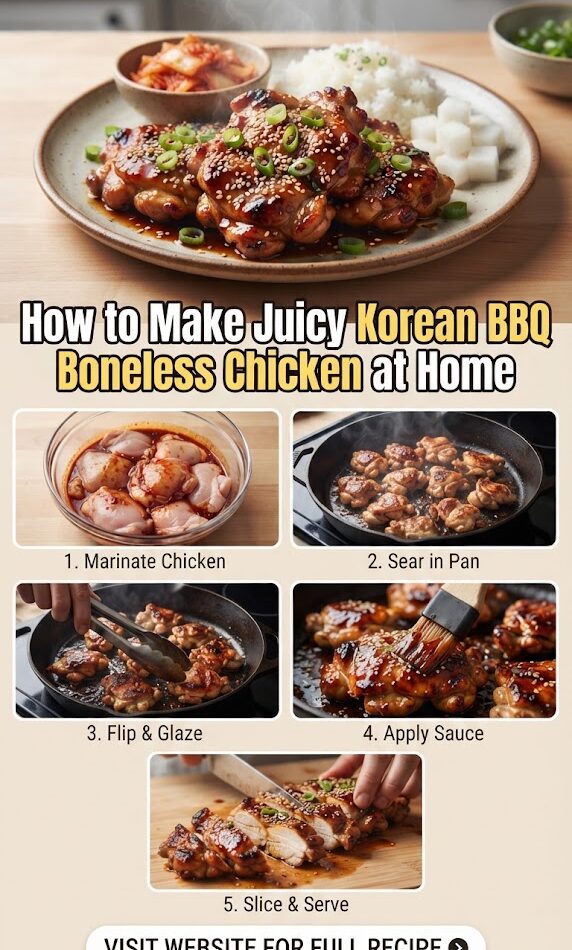
The intoxicating aroma of sizzling meat, the perfect balance of spicy, sweet, and savory, and that signature charred finish—Korean BBQ is more than just a meal; it is a sensory experience. While many associate the classic K-BBQ experience with beef short ribs (Galbi) or thinly sliced ribeye (Bulgogi), there is a rising star in the world of Korean cuisine that is taking home kitchens by storm: Juicy Korean BBQ Boneless Chicken.
Whether you are a seasoned home cook or a beginner looking to impress, mastering the art of boneless Korean BBQ chicken (often referred to as Dak-Bulgogi or Dak-Galbi style) is a game-changer. It is faster than beef, more affordable, and when done correctly, every bit as succulent. In this comprehensive guide, we will dive deep into the techniques, ingredients, and secrets required to produce tender, flavor-packed chicken that rivals the best restaurants in Los Angeles or Seoul.
The Philosophy of Korean BBQ: The Flavor Trifecta
Before we pick up a knife, it is essential to understand the three pillars of Korean flavor: Sweet, Spicy, and Umami. Unlike Western BBQ, which often relies heavily on tomato-based sauces and smoke, Korean BBQ is a symphony of fermented pastes, aromatics, and natural sweetness.
- Gochujang (Spicy): A fermented red chili paste that provides heat, depth, and a lingering sweetness.
- Soy Sauce (Umami): The foundation of salt and fermented depth.
- Sugar/Fruit (Sweet): Essential for balancing the heat and helping the meat caramelize on the grill.
When these three elements harmonize with aromatics like garlic and ginger, you create a profile that is addictive and universally loved.
Selecting the Right Cut: Why Boneless Thighs Are King
If your goal is “juicy,” there is only one choice: Boneless, skinless chicken thighs.
Why Thighs Beat Breasts
Chicken breasts are lean and prone to drying out, especially under the high-heat conditions of BBQ. Chicken thighs, however, contain a higher fat content and more connective tissue. As the chicken cooks, this fat renders, basting the meat from the inside out. This ensures that even if you overcook the chicken by a minute or two, it remains tender and moist.
Prepping the Meat
To ensure maximum surface area for the marinade to penetrate:
- Uniformity: Cut your chicken into bite-sized pieces (about 1.5 inches). This allows for even cooking and a higher sauce-to-meat ratio.
- Trimming: Remove any excessive large chunks of white fat, but keep the smaller bits for flavor.
- Tenderizing: If you are using particularly thick thighs, a light pounding with a meat mallet can help the marinade soak in deeper.
The Secret Marinade: Crafting the Liquid Gold
The marinade is where the magic happens. A great Korean BBQ marinade does two things: it flavors the meat and it breaks down muscle fibers to ensure tenderness.
The “Spicy Red” Marinade (The Classic)
- Gochujang (4 tbsp): The soul of the dish.
- Gochugaru (1-2 tbsp): Korean chili flakes for extra heat and vibrant color.
- Soy Sauce (2 tbsp): For that salty, savory backbone.
- Honey or Brown Sugar (3 tbsp): Honey provides a beautiful sheen, while brown sugar adds a deep molasses note.
- Mirin or Rice Wine (2 tbsp): To neutralize any “gamey” scents and add a subtle sweetness.
- Toasted Sesame Oil (1 tbsp): For an earthy, nutty aroma.
- Grated Garlic (4 cloves): Don’t be shy with the garlic; it’s a staple.
- Grated Ginger (1 tsp): Adds a sharp, refreshing bite.
- Black Pepper: To round out the spice profile.
The “Sweet & Savory” Marinade (Non-Spicy Version)
For those who prefer a milder profile similar to traditional beef Bulgogi:
- Soy Sauce (1/2 cup)
- Pear Puree (1/4 cup): Korean pears (Bae) contain enzymes that act as a natural meat tenderizer. If you can’t find them, a grated Fuji apple or even a Bosc pear works well.
- Brown Sugar (3 tbsp)
- Minced Garlic and Ginger
- Sesame Oil
- Sliced Scallions
The Science of Juiciness: Marination Time
How long should you marinate?
- Minimum: 30 minutes. This is enough for the surface to be flavored.
- Optimal: 4 to 6 hours. This allows the enzymes in the pear or the acids in the rice wine to deeply tenderize the fibers.
- Maximum: 24 hours. Beyond this, the chicken can start to become mushy as the proteins break down too much.
Pro Tip: Always marinate in a glass bowl or a heavy-duty zip-top bag. Avoid reactive metal bowls, which can impart a metallic taste to the acidic marinade.
Cooking Methods: Achieving the Perfect Char
The goal of Korean BBQ is to get a slightly charred, caramelized exterior while keeping the inside dripping with juice. Here are the three best ways to achieve this at home:
1. The Cast Iron Skillet Method (Recommended for Indoor)
A cast iron skillet is the best substitute for a charcoal grill. It retains heat exceptionally well and creates a beautiful crust.
- Heat: Get the skillet ripping hot over medium-high heat.
- Oil: Use a high-smoke-point oil like avocado or grapeseed oil.
- The Sizzle: Add the chicken in a single layer. Do not overcrowd the pan. If you add too much meat at once, the temperature drops, and the chicken will steam in its own juices instead of searing.
- The Wait: Let it sit undisturbed for 3-4 minutes to develop a crust before flipping.
2. The Outdoor Grill Method
This provides the most authentic “smoky” flavor.
- Setup: Use medium-high heat.
- Prevention: Since the marinade contains sugar, it can burn quickly. Keep the chicken moving and use a grill mat if you’re worried about pieces falling through the grates.
- Basting: Brush a little extra marinade on the chicken during the last 2 minutes of grilling for a sticky, glossy finish.
3. The Air Fryer Method (The Modern Way)
- Temperature: 380°F (190°C).
- Time: 12-15 minutes, shaking the basket halfway through.
- Finish: Hit it with a quick broil for 1-2 minutes at the end to get those charred edges.
The Essential Accompaniments: Completing the Table
In Korea, BBQ is never eaten in isolation. It is part of a larger ecosystem of side dishes known as Banchan. To truly elevate your home-cooked meal, you need these staples:
1. Ssam (The Wraps)
The most common way to eat Korean BBQ chicken is to make a “Ssam” (wrap).
- Lettuce: Red leaf or Romaine.
- Perilla Leaves: These have a unique, minty, anise-like flavor that cuts through the richness of the chicken.
- Rice: Short-grain purple or white sticky rice.
2. Ssamjang (The Magic Sauce)
You cannot have K-BBQ without Ssamjang. It is a thick, spicy paste made from:
- Doenjang (Fermented soybean paste)
- Gochujang
- Sesame oil
- Minced garlic and onions
- Honey
3. Quick Pickled Radish (Mu-Ssaem)
The acidity and crunch of pickled radish are the perfect palate cleansers between spicy bites of chicken. You can make a quick version by slicing Daikon radish thinly and soaking it in a mixture of vinegar, sugar, water, and a pinch of salt.
Step-by-Step Instructions: The Master Recipe
Ingredients:
- 2 lbs boneless, skinless chicken thighs
- 1/2 cup Gochujang (Korean chili paste)
- 3 tbsp Soy sauce
- 2 tbsp Honey
- 1 tbsp Brown sugar
- 2 tbsp Mirin
- 1 tbsp Toasted sesame oil
- 5 cloves Garlic, minced
- 1 tbsp Fresh ginger, grated
- 1/2 tsp Black pepper
- 3 Green onions, chopped (for garnish)
- 1 tbsp Toasted sesame seeds (for garnish)
Instructions:
- Prepare the Chicken: Pat the chicken thighs dry with a paper towel. Cut them into 1.5-inch pieces. Place them in a large mixing bowl.
- Mix the Marinade: In a separate medium bowl, whisk together the gochujang, soy sauce, honey, brown sugar, mirin, sesame oil, garlic, ginger, and black pepper until smooth.
- Marinate: Pour the marinade over the chicken. Use your hands (gloves recommended) or a spatula to ensure every piece is thoroughly coated. Cover and refrigerate for at least 1 hour.
- The Cooking Process:
- Heat a large cast-iron skillet or non-stick pan over medium-high heat with a tablespoon of oil.
- Working in batches, add the chicken to the pan.
- Cook for 5-6 minutes on the first side until a deep reddish-brown crust forms.
- Flip and cook for another 4-5 minutes until the internal temperature reaches 165°F (74°C).
- Rest and Garnish: Remove the chicken from the heat and let it rest for 3 minutes. This allows the juices to redistribute. Sprinkle with toasted sesame seeds and fresh green onions.
- Serve: Serve immediately with warm rice, lettuce leaves, and ssamjang.
Pro Tips for the Ultimate Experience
- The “Double Cook” Secret: For an extra layer of flavor, sear the chicken in a pan until just cooked through, then finish it under the oven broiler for 60 seconds. This creates the “burnt ends” effect that people crave.
- Don’t Wash Your Chicken: In the US, it’s a common myth that washing chicken makes it safer. In reality, it splashes bacteria around your sink and makes the meat wet. For a good sear, you want the meat as dry as possible before the marinade goes on.
- Use Fresh Ginger: Never substitute dried ginger powder. The enzymes in fresh ginger are crucial for breaking down the chicken’s proteins, resulting in that “melt-in-your-mouth” texture.
- The Rice Factor: Use a high-quality Korean or Japanese short-grain rice. The starchiness of short-grain rice holds the chicken and sauce better than long-grain varieties like Basmati.
Health Benefits of Korean BBQ Chicken
Korean BBQ isn’t just delicious; it’s relatively healthy compared to many other “BBQ” styles.
- Fermentation Power: Gochujang and Doenjang are fermented, meaning they contain probiotics that are beneficial for gut health.
- Metabolism Boost: The capsaicin in the chili flakes and gochujang can help boost metabolism and provide an anti-inflammatory effect.
- Garlic and Ginger: These “superfoods” are well-known for their immune-boosting properties and ability to aid digestion.
- High Protein, Lower Fat: By using boneless thighs and grilling/searing instead of deep-frying, you get a high-protein meal with manageable calorie counts.
Troubleshooting Common Issues
“My chicken is too salty!”
This usually happens if the soy sauce was left to marinate for too long (over 24 hours) or if you used a low-quality, high-sodium soy sauce. To fix this, serve it with extra unseasoned rice or wrap it in more lettuce to dilute the saltiness.
“My chicken isn’t getting charred, it’s just boiling.”
This is caused by overcrowding the pan. The meat releases moisture as it cooks; if there’s nowhere for the steam to go, the meat boils. Cook in smaller batches or use a larger pan.
“The sauce is burning before the chicken is cooked.”
The sugar in the marinade (honey/sugar) has a low burn point. If this happens, lower the heat slightly and add a tablespoon of water or mirin to the pan to create steam and slow down the caramelization.
Exploring Variations: Regional and Modern Twists
1. Cheese Dakgalbi (The Crowd Pleaser)
Popular in the university districts of Seoul, this version involves taking your spicy BBQ chicken and smothering it in a layer of melted mozzarella cheese. The creamy cheese perfectly offsets the heat of the gochujang.
2. Korean Fried BBQ Chicken (The Hybrid)
If you love a crunch, you can toss the boneless chicken in potato starch or cornstarch before pan-frying. Once crispy, toss it in the BBQ sauce. This gives you the texture of Korean Fried Chicken with the deep flavors of BBQ.
3. Low-Carb/Keto Korean BBQ
To make this Keto-friendly, replace the honey/sugar with a sugar-free sweetener like Allulose or Erythritol. Serve it in “naked” bowls with cauliflower rice and avocado.
Storage and Reheating Tips
Storage: Leftovers can be stored in an airtight container in the refrigerator for up to 3 days.
Reheating for Juiciness:
- Avoid the Microwave: Microwaves tend to make chicken rubbery.
- The Skillet Method: Reheat in a skillet over medium-low heat with a splash of water or chicken broth. Cover with a lid to create a “steaming” effect that revives the moisture.
- The Air Fryer: Reheat at 350°F for 3-4 minutes to regain some of that surface crispness.
Frequently Asked Questions (FAQs)
Q: Can I use chicken breast instead of thighs? A: Yes, but be very careful. Marinate for at least 2 hours and reduce the cooking time by 1-2 minutes per side to prevent it from becoming dry.
Q: Where can I buy Gochujang? A: Most major US grocery chains (Kroger, Whole Foods, Wegmans) now carry it in the international aisle. However, for the most authentic flavor, visit an H-Mart or local Korean grocery store. Look for brands like CJ Haechandle.
Q: Is Korean BBQ chicken gluten-free? A: Not typically. Gochujang and soy sauce usually contain wheat. However, you can find gluten-free Gochujang and use Tamari (gluten-free soy sauce) to make this recipe safe for Celiacs.
Q: How do I make it more/less spicy? A: The heat comes from the Gochujang and Gochugaru. To make it milder, reduce the Gochugaru and increase the honey. To make it hotter, add fresh Thai bird’s eye chilies or more chili flakes.
Conclusion: Bringing the Spirit of Seoul to Your Kitchen
Making juicy Korean BBQ boneless chicken at home is more than just following a recipe; it’s about embracing the bold, vibrant flavors of Korean culture. By focusing on high-quality boneless thighs, a well-balanced marinade, and proper searing techniques, you can create a meal that is both comforting and sophisticated.
The beauty of this dish lies in its versatility. It works for a quick weeknight dinner, a meal-prep staple, or the centerpiece of a festive weekend gathering. So, fire up your skillet, prep your lettuce wraps, and get ready to experience the ultimate juicy Korean BBQ chicken. Once you taste the homemade version, you may never feel the need to order takeout again.
Enjoy your culinary journey, and as they say in Korea before a delicious meal: “Jal-meok-ges-seum-ni-da!” (I will eat well!)