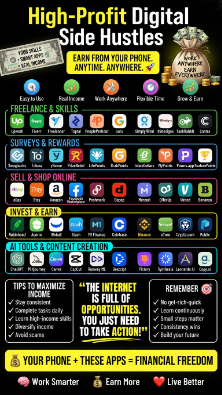
Selling Digital Downloads: A 3000-Word Masterclass on Building a Profitable Online Empire
In the modern digital economy, the dream of “making money while you sleep” has transitioned from a late-night infomercial trope to a tangible reality for millions of creators. The catalyst? Digital downloads. Unlike physical products that require inventory management, shipping logistics, and manufacturing overhead, digital downloads offer a high-profit, scalable business model that can be launched from a kitchen table.
Whether you are a graphic designer, a musician, a coder, or someone with a unique specialized skill, selling digital products is the most efficient path to financial independence. This comprehensive guide will walk you through every nuance of the industry—from ideation and creation to SEO optimization and global scaling.
What are Digital Downloads?
A digital download is any product that exists in a non-tangible, electronic format. Once a customer purchases the item, they receive a link or an automated email to download the file directly to their device.
The beauty of this model lies in its infinite supply. You create the asset once, and you can sell it ten thousand times without ever worrying about “out of stock” notices.
Popular Types of Digital Downloads
- Educational Products: E-books, PDF guides, online courses, and workbooks.
- Creative Assets: Stock photos, vector illustrations, fonts, icons, and textures.
- Templates: Resume templates, Notion dashboards, Excel spreadsheets, and Canva designs.
- Software and Code: WordPress themes, plugins, mobile apps, and scripts.
- Audio and Music: Beats, sound effects, meditation tracks, and jingles.
- Printables: Planners, wall art, coloring pages, and wedding invitations.
- Professional Services turned Products: Legal contract templates, marketing audit checklists, and business plan frameworks.
Why Sell Digital Downloads? The Benefits of the Virtual Storefront
Before diving into the “how,” it is vital to understand the “why.” Why choose digital over physical?
- Low Overhead Costs: There is no warehouse to rent, no shipping labels to print, and no raw materials to source. Your primary costs are your time and a few software subscriptions.
- Global Reach: Your market is the entire world. A customer in Tokyo can purchase your product at the same moment as someone in New York, with no shipping delays or customs fees.
- Passive Income Potential: While the initial creation requires effort, the delivery process is entirely automated. You don’t need to be present to fulfill an order.
- High Profit Margins: Without the cost of goods sold (COGS) associated with physical items, your profit per sale remains incredibly high—often exceeding 90% after platform fees.
- Easy Updates: If you find a typo in your e-book or want to add a feature to your software, you simply upload a new file. You can even offer lifetime updates to your customers, increasing brand loyalty.
Step 1: Market Research and Finding Your Profitable Niche
The biggest mistake new creators make is building a product they think people want without checking if there is a market for it. Success in digital sales starts with data, not just inspiration.
Identifying the “Pain Point”
The most successful digital products solve a specific problem. People don’t buy a “PDF on gardening”; they buy a “12-Month Planting Guide to Greenhouse Tomatoes for Beginners.” The more specific the solution, the higher the perceived value.
Competitor Analysis
Browse marketplaces like Etsy, Creative Market, Gumroad, and Udemy. Look for:
- Best Sellers: What is consistently at the top of the search results?
- Negative Reviews: Read the 2 and 3-star reviews of your competitors. What are customers complaining about? Can you create a product that fixes those flaws?
- Gaps in the Market: Are there products for “Real Estate Marketing” but none specifically for “Luxury Beachfront Real Estate Agents”? That is your niche.
Using Google Trends and Keyword Research
Tools like Google Trends, Ahrefs, and Ubersuggest allow you to see what people are searching for. If search volume for “A.I. prompt engineering guides” is skyrocketing, it’s a clear indicator of demand.
Step 2: Creating Your Digital Product
Once you have an idea, it’s time to build. Quality is the only way to survive in a saturated market.
Essential Tools for Creation
- Graphic Design: Canva (for beginners), Adobe Creative Cloud (for pros), or Figma.
- Writing and E-books: Google Docs, Scrivener, or Adobe InDesign for high-end layout.
- Video Production: Loom (for screen sharing), Final Cut Pro, or DaVinci Resolve.
- Product Mockups: Use tools like Placeit or Smartmockups to show your digital product on a physical screen or in a realistic setting. This helps customers visualize what they are buying.
The Importance of “Value Stacking”
To stand out, don’t just sell one file. Stack the value. If you are selling a budget spreadsheet, include a 5-minute video tutorial on how to use it and a PDF guide on “10 Ways to Save $500 This Month.” This “bundle” approach justifies a higher price point.
Step 3: Where to Sell Your Digital Downloads
Choosing the right platform is critical. You generally have two choices: Marketplaces or Self-Hosted storefronts.
Option A: The Marketplaces (Etsy, Creative Market, Envato)
Pros:
- Built-in traffic. People go there specifically to buy.
- Trust is already established.
- Easy setup.
Cons:
- High competition.
- Heavy transaction fees.
- You don’t “own” the customer (you often can’t get their email address for future marketing).
Option B: Self-Hosted (Shopify, WooCommerce, LemonSqueezy, Gumroad)
Pros:
- Total control over branding.
- Lower long-term fees.
- You own the email list.
- No direct competitors’ products on your page.
Cons:
- You are responsible for driving your own traffic.
- Requires more technical setup (though platforms like Gumroad make this very easy).
The Expert Strategy: Start on a marketplace to validate your idea and get immediate sales. Once you have a following, migrate your audience to your own website to maximize profits.
Step 4: SEO Strategies for Digital Downloads
If customers can’t find you, they can’t buy from you. Search Engine Optimization (SEO) is the engine of your business.
Keyword Optimization
Your title should not be “Creative Planner.” It should be “Digital Daily Planner for iPad – Goodnotes Compatible – Productivity Tracker.”
- Primary Keyword: The main thing you are selling.
- Secondary Keywords: Features, compatibility, and the target audience.
Metadata and Descriptions
Don’t just list the features. Focus on benefits.
- Feature: “50-page PDF.”
- Benefit: “A step-by-step roadmap that saves you 20 hours of research.”
High-Quality Visuals
In the digital world, people buy with their eyes.
- Use high-resolution screenshots.
- Create “Explainer” graphics that highlight what’s inside the download.
- Use video previews if the platform allows it.
Step 5: Pricing for Profit and Psychology
Pricing digital products is an art. Since there is no “unit cost,” your price is determined by value.
The Three-Tiered Pricing Model
Offer options to capture different segments of the market:
- The Basic: The core file (e.g., $19).
- The Deluxe: The core file + a video masterclass + a checklist (e.g., $49).
- The Premium: Everything in Deluxe + a 30-minute 1-on-1 consultation (e.g., $199).
Psychological Pricing Triggers
- The Power of .97 or .99: $29.99 feels significantly cheaper than $30.00.
- Anchoring: Show a “Regular Price” (e.g., $97) slashed out next to a “Sale Price” ($27).
- Scarcity and Urgency: Use “Limited time bonuses” or “Flash sales” to encourage immediate action.
Step 6: Marketing and Traffic Generation
A “build it and they will come” mentality is a recipe for failure. You need a proactive marketing machine.
Content Marketing (The Long Game)
Start a blog or a YouTube channel providing free value related to your niche. If you sell coding templates, make videos on “How to fix common CSS bugs.” At the end of every piece of content, link to your digital product.
Social Media (The Engagement Game)
- Pinterest: This is a goldmine for digital downloads (especially planners and printables). Create visually stunning pins that lead to your sales page.
- TikTok/Reels: Show the “behind the scenes” of your creation process. Use trending audio to showcase the “transformation” your product provides.
- Twitter/X: Great for selling B2B products like SaaS, Notion templates, and marketing guides.
Email Marketing (The Conversion Game)
Your email list is your most valuable asset.
- The Lead Magnet: Give away a small part of your product for free (e.g., a “lite” version or a one-page cheat sheet) in exchange for an email address.
- The Nurture Sequence: Send 3-5 automated emails providing more value.
- The Pitch: Once the trust is built, offer your main digital download.
Step 7: Legalities, Taxes, and Protecting Your Intellectual Property
Selling digital products globally brings specific legal responsibilities.
Digital Taxes (VAT MOSS)
If you sell to customers in the European Union or the UK, you are often required to collect and remit VAT (Value Added Tax) based on the customer’s location. Using platforms like LemonSqueezy or Paddle can be a lifesaver here, as they act as the “Merchant of Record” and handle these taxes for you.
Copyright and Licensing
Clearly state what the customer can and cannot do with your file.
- Personal Use License: They can use it for themselves but cannot resell it.
- Commercial Use License: They can use it in their business projects.
- PLR (Private Label Rights): They can edit it and sell it as their own.
Protecting Your Files
While it is impossible to prevent 100% of piracy, you can deter it:
- Use PDF stamping (puts the customer’s email on every page).
- Use unique download links that expire after a certain number of attempts.
- Use “Digital Rights Management” (DRM) for high-end software.
Step 8: Customer Support and Post-Purchase Experience
The sale doesn’t end when the customer clicks “buy.” The post-purchase experience determines whether you get a 5-star review or a refund request.
The “Thank You” Page
Immediately after purchase, redirect the user to a page that:
- Confirms the purchase was successful.
- Provides clear instructions on how to access the file.
- Offers a “Help” contact email.
Handling Refunds
Digital products are tricky because they cannot be “returned.”
- The Strict Policy: “No refunds due to the nature of digital goods.”
- The Happiness Guarantee: “14-day money-back guarantee if you can show you tried the product and it didn’t work for you.” A more generous refund policy often leads to more total sales, even if a few people abuse it.
Step 9: Scaling Your Business to Six Figures
Once you have your first $1,000 in sales, it’s time to scale.
Affiliate Marketing
Let other people sell your product for you. Offer a 30-50% commission to influencers or bloggers in your niche. This costs you nothing upfront and can explode your sales volume.
Upselling and Cross-selling
If someone buys your “Social Media Branding Kit,” offer them your “Instagram Content Calendar” at a discount on the checkout page. This increases your Average Order Value (AOV).
Paid Advertising
Once you know your conversion rate, you can safely put money into Meta (Facebook/Instagram) or Google Ads. If you spend $1 on ads and make $3 in sales, you have an infinite money machine.
Step 10: Staying Ahead of the Curve (Future Trends)
The world of digital downloads is evolving. Here is what to watch for:
- A.I. Integration: Using AI to speed up product creation (e.g., using Midjourney for textures or ChatGPT for initial e-book outlines). However, always add your “human touch” to ensure high quality.
- Interactive Digital Products: Moving away from static PDFs toward interactive Notion templates and specialized apps.
- Membership Models: Instead of a one-time download, offer a monthly subscription where users get a “New Download Every Month.” This creates recurring revenue.
Conclusion: The Path Forward
Selling digital downloads is not a “get rich quick” scheme. It requires research, high-quality production, and consistent marketing. However, it is one of the few business models that offers a truly unlimited upside with virtually zero risk.
Your knowledge and creativity have value. Whether it’s a simple checklist or a complex piece of software, there is someone, somewhere in the world, willing to pay for the time you can save them or the problem you can solve for them.
The best time to start was ten years ago. The second best time is today. Identify your niche, create something remarkable, and start your journey toward building a scalable, digital empire.
Summary Checklist for Success:
- Identify Niche: High demand, low-to-medium competition.
- Validate: Check marketplaces and search volume.
- Create: Use professional tools; focus on “Value Stacking.”
- Choose Platform: Etsy for ease, Shopify/Gumroad for control.
- Optimize SEO: Use long-tail keywords in titles and descriptions.
- Price: Use psychological pricing and tiered options.
- Market: Build an email list and use social media for traffic.
- Scale: Launch an affiliate program and use paid ads.
By following this roadmap, you are no longer just a creator; you are a digital entrepreneur. The digital shelf is infinite—go claim your space on it.