
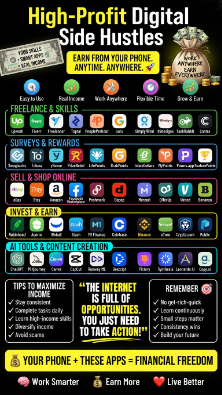
Your 2026 Blueprint for Financial Freedom
The side hustle landscape has undergone a profound transformation. What was once a way to earn extra spending money has become a critical financial lifeline, with nearly 44% of U.S. professionals now generating income from creative, social media, or AI-powered side gigs . As economic uncertainty rises and traditional job security erodes, digital side hustles offer not just supplementary income but genuine financial autonomy. With over 3 million active freelancers in Pakistan alone, the gig economy represents a global shift toward decentralized, skill-based work .
The most lucrative digital side hustles in 2026 share three common traits: they leverage AI or digital workflows, solve concrete business problems, and scale without requiring physical expansion . This guide explores the most promising opportunities, breaking down exactly how to launch, price, and scale each one for maximum profit.
The AI-Powered Service Economy: High-Skill, High-Margin Opportunities
AI Automation Setup for Small Businesses
Small businesses—clinics, coaching centers, D2C brands, and real estate agents—desperately need automation but lack the technical expertise to implement it. This skills gap has created a lucrative niche for freelancers who can build ChatGPT-based workflows, WhatsApp automation systems, and no-code solutions .
What You Actually Do:
- Build automated reply systems for WhatsApp and Instagram DM flows
- Create lead capture forms connected to Google Sheets or CRMs
- Set up content scheduling systems using AI tools
- Develop basic customer support bots
Why It’s Profitable: Businesses want automation but can’t figure it out themselves. No-code tools have made setup easier, but they’ve created more demand for implementation experts . One setup project frequently converts into monthly maintenance income, making this closer to “digital consultancy” than typical gig work.
Getting Started: Familiarize yourself with tools like Zapier, Make, ChatGPT API, and WhatsApp Business API. Start by offering automation setup to local businesses where you can demonstrate tangible ROI, then expand globally through platforms like Upwork or direct outreach.
AI-Assisted Freelance Services
The rise of AI tools hasn’t eliminated freelance work—it has transformed it. Service providers who learn to use AI for speed and scale can confidently charge market rates while working significantly faster than competitors . The key is positioning AI as leverage, not replacement.
The Strategic Approach: Use AI for drafting, research, and variation generation, but add human judgment, customization, and quality control. This applies across writing, design, marketing, video editing, and translation services .
Pricing Strategy: Productize your services with fixed deliverables. Instead of charging by the hour for “content writing,” offer “10 LinkedIn posts per week” or “podcast show notes package” at a fixed monthly rate. This creates predictable income and positions you as a solutions provider rather than a commodity .
Earnings Potential: Freelance writers average around $22 per hour with high-end rates reaching $52, according to Indeed data . Specialized AI-assisted services command premium rates as clients recognize the efficiency gains.
Short-Form Video: The Creator Economy’s Engine
Short-Form Video Editing
With attention spans shrinking and short-form video dominating social media, video editing has become a specialized, highly demanded skill. Businesses, coaches, and creators constantly post Instagram Reels, YouTube Shorts, and TikTok videos, but most lack the time or skills to edit them properly .
Core Responsibilities:
- Fast cuts and pacing for retention
- Subtitles and hook text placement
- Meme-style transitions
- Repurposing long-form videos into short clips
Why It’s Stable: Every creator needs 10–30 shorts weekly. Demand is consistent, not seasonal. AI tools speed up workflow, allowing higher output per editor and greater profitability per client .
Earnings Potential: Social media managers and video editors earn between $25–$75 per hour when freelancing, with those capable of creating quality short-form video and reacting swiftly to trends commanding premium rates .
Getting Started: Build a portfolio of short-form edits using free or inexpensive footage. Master editing tools like CapCut, Descript, and Adobe Premiere Pro. Offer package deals (e.g., “10 Reels per week for $500/month”) to secure recurring revenue.
User-Generated Content (UGC) Creator
UGC is not influencer marketing. You don’t need followers. Brands now pay creators to make realistic, phone-shot content that looks like genuine customer experiences—and they’re paying well for it .
Typical Work:
- Product demos shot at home
- “Before/after” style videos
- Lifestyle clips for advertisements
- Voiceover product reviews
Market Size: The UGC market will reach over $12 billion in 2026, projected to surpass $15 billion by 2027. Notably, 78% of consumers prefer UGC to traditional advertising, and 62% of brands report higher engagement from this content type .
Earnings Potential: Creators are typically paid per video rather than per campaign, allowing you to work with multiple brands simultaneously. Rates vary by experience and brand size, but quality UGC work consistently generates significant income.
Getting Started: No following is required—brands actually report higher engagement from smaller creators in specific niches . Create sample content for products you already own, build a portfolio, and pitch directly to brands on platforms like Upwork or through cold outreach.
Scalable Digital Products: Passive Income That Compounds
Online Courses and Digital Guides
Despite claims that courses are “dead,” the market continues generating millions daily in course sales. The reality is that lazy, low-quality offers are failing, but well-executed, high-value courses are thriving .
What Works:
- Structured curricula solving specific problems
- Multiple pricing tiers (basic, premium, VIP)
- Actionable content with measurable outcomes
- Supplemented by templates, checklists, and resources
Earnings Potential: Online courses can net anywhere from $1,000 to six figures, depending on niche, marketing, and quality . The best sellers treat their courses as part of a product ecosystem, not a one-off creation.
Strategic Framework: Audit what you already know that people pay to learn. Package it as a system with three layers:
- Front-end: eBook or template ($17–$47) removes friction and proves expertise
- Mid-tier: Course or template bundle ($97–$297) serves those ready to go deeper
- Back-end: Membership or advanced toolkit captures recurring revenue
Templates, Planners, and Toolkits
Selling digital assets has evolved beyond basic Canva templates. The real money is in specialized digital systems that solve specific problems. In 2026, people don’t want designs—they want systems .
Top-Selling Digital Products:
- Notion dashboards for productivity and workflows
- Resume + interview kits for specific industries (tech, MBA, government exams)
- Budget spreadsheets and personal finance tools
- Social media templates (Canva-compatible)
- Website themes and landing page templates
- Brand kit systems for small businesses
- Digital planners and organization tools
Why It Works: One product can sell repeatedly. Buyers prefer ready-to-use systems over blank templates. Products work globally, not just locally. Startup costs are minimal, and profit margins range from 70–90% .
Market Insight: Personal finance spreadsheets are among the most searched digital products right now, as people need help managing money and want to figure it out themselves . Similarly, healthy meal plans and fitness guides in the $27–$97 range consistently sell well.
Getting Started: Identify what you’ve already created or can easily create that saves people time or solves a problem. Start with one product line and expand based on what your audience actually buys.
Niche Consulting and Specialized Services
Niche Freelance Consulting
General freelancing is crowded. The winners now go very narrow and very specific. Businesses don’t want generalists anymore—they want experts who understand their specific industry and challenges .
High-Demand Micro-Niches:
- “Instagram growth for dentists”
- “Resume optimisation for software engineers”
- “Email marketing for Shopify brands”
- “Sales script writing for real estate agents”
- “Notion setup for startups”
- “Shopify optimization for D2C brands”
Why It Works: Specialization allows premium pricing. It’s easier to build a reputation in a micro-category. Even a small client base can generate stable monthly income when positioned correctly .
Earnings Potential: Micro-consulting is booming as companies need specialty help despite layoffs. The average consultant salary is around $92,000, with high-end consultants earning $159,000, according to Indeed .
Getting Started: Identify the intersection of your expertise, market demand, and your genuine interest. Research current postings on freelancing sites to validate demand. Build a portfolio of case studies or testimonials from early clients—even if you start by offering services at reduced rates to build credibility.
Expert Software Consulting
Rather than offering general technical support, specialize in a single platform such as Notion, Shopify, HubSpot, or advanced AI tools. Businesses actively seek experts to help with software setup, optimization, troubleshooting, and employee training .
Why It’s Lucrative: Becoming the go-to expert for a specific platform allows you to command premium rates. You’re not competing with thousands of generalists—you’re one of a handful of specialists in your niche.
Getting Started: Deeply master one platform. Create free content (tutorials, templates, guides) to demonstrate expertise and attract clients. As your reputation grows, move from project-based work to retainer agreements.
The Freelancing Ecosystem: Platforms and Pricing
Strategic Platform Selection
The online freelance world offers different environments for different services:
- Upwork: The corporate high-rise—professional and competitive, best for long-term relationships. Requires a polished profile and portfolio .
- Fiverr: The fast-paced marketplace—transactional and gig-based. Package services like products. Speed and clear deliverables matter most .
- LinkedIn: The global networking lounge—not a traditional marketplace but a powerful lead generation platform. Clients hire based on credibility, expertise, and visibility .
- Specialized Platforms: Preply and iTalki for tutoring, Turing and Contra for vetted freelancers, niche communities for specific industries .
Pricing Strategy for Beginners
For freelancers entering global platforms, pricing strategy matters more than raw skill in the early phase. Successful profiles typically begin conservatively to build trust and social proof :
- Starting Rates: $5–10 per hour or $20–50 per project for clearly defined tasks
- Objective: Not income maximization but review acquisition and delivery consistency
- Next Tier: $15–25 per hour after accumulating 5–10 strong verified reviews
- Premium Tier: $50+ per hour for specialized roles in AI tooling, automation, and performance marketing
Key Insight: In 2026, it’s increasingly common for skilled freelancers in AI-adjacent niches to earn $2,000–$3,500 per month, with top specialists exceeding that through retainers or outcome-based contracts .
Building Your Digital Empire: Strategic Principles
Stack Multiple Revenue Streams
Relying on a single income source—even a profitable one—is building on quicksand. One platform policy change, algorithm shift, or market disruption can wipe out your income overnight. The most successful digital entrepreneurs stack multiple revenue streams :
- A core consulting or service business
- Digital products (courses, templates, guides)
- Affiliate income or partnerships
- Retainer clients for predictable monthly income
Data Point: 76% of retailers agree that diversifying income sources is essential for sustainable growth. Businesses with multiple revenue channels consistently outperform those relying on one .
Treat It Like a Business
Side hustle success requires a business mindset, not a hobbyist approach. Key principles :
- Open a separate account for online income
- Track earnings and expenses weekly
- Set aside a portion for taxes
- Build an emergency fund
- Don’t over-invest in tools until income justifies it
Pricing for Value, Not Effort
Price based on the value you provide, not the time it takes. A template that saves a business 10 hours weekly is worth far more than the hour it took to create. Don’t undervalue yourself—research market rates and price at a level you’re proud to say out loud .
Guard Against Burnout
Digital hustles require boundaries :
- Set clear work hours and client communication boundaries
- Take regular breaks to recharge
- Use verified payment platforms and avoid offers that seem too good
- Practice digital literacy and basic cybersecurity
- Keep business and personal accounts separate
The Future: Emerging Opportunities
Content-to-Lead Systems
Stop creating content that doesn’t convert. Build capture mechanisms using lead magnets and automated welcome sequences that turn viewers into paying customers .
Productized Micro-Agencies
Scale a single outcome—such as short-form video production or newsletter management—with a repeatable stack and onboarding flow. This moves you from freelancer to agency owner without the complexity of managing diverse client needs .
Newsletter Monetization
Platforms like Substack and Beehiiv have made paid newsletters accessible. By sharing exclusive insights, industry analysis, or specialized advice, you can attract subscribers willing to pay for valuable information .
Live Social Shopping Host
The global live commerce market is expected to reach $3.48 billion by 2030, with a 21.2% CAGR. As a live shopping host, you go live on TikTok Shop, Instagram Live, or Whatnot to sell products and earn commissions .
Final Thoughts: The Digital Path Forward
The strongest digital side hustles today share common elements: they leverage AI or digital workflows, solve genuine business problems, and scale without physical expansion . They’re not about “extra work”—they’re about becoming part of how modern businesses actually operate.
The most successful digital entrepreneurs approach side hustles with a strategic mindset. They start small, validate demand, build credibility through testimonials, and expand gradually. They diversify income sources, price based on value, and maintain professional boundaries.
Whether you’re driven by economic uncertainty, career exploration, or ambition for financial independence, the digital economy offers unprecedented opportunities. You don’t need a perfect plan or a formal business background—you just need to start. The global market is hungry for talent, and your skills have value far beyond your local job market.
Stop theorizing and start building. Use AI tools as leverage, not a crutch. Build repeatable workflows that pay. Your audience is already out there, searching for the solution you can provide.